

Crochet Patterns vs. Craft Books: Which Is Right for You
Table of Contents
- Crochet Patterns vs. Craft Books: Key Differences
- Best Crochet Pattern Books for Beginners
- Benefits of Digital Crochet Patterns
- Cost Comparison: Patterns vs. Books
- How to Organize Crochet Patterns and Books
- Copyright and Pattern Usage Rights
- Which Format Should You Choose?
Last Updated: August 29, 2026
Crochet Patterns vs. Craft Books: Key Differences
The choice between crochet patterns and craft books shapes how you learn, create, and organize your projects. At Crochet Creations Hub, we empower makers to navigate this decision by understanding what each format actually delivers. Crochet patterns vs. craft books aren't interchangeable, they serve different purposes, suit different skill levels, and fit different workflows.
Physical craft books offer comprehensive instruction, curated collections, and the tactile experience of flipping through pages while you work. They're reference libraries. Digital crochet patterns deliver instant access, searchability, and the convenience of having dozens of designs at your fingertips without shelf space. They're on-demand resources.
The real difference comes down to how you work. Some crafters thrive with a complete book they can return to repeatedly. Others prefer collecting individual patterns for specific projects, building a personal library over time. Understanding your own workflow, whether you're a beginner seeking structured guidance or an intermediate crocheter hunting for specific amigurumi designs, determines which format serves you best.
Best Crochet Pattern Books for Beginners
Beginner crocheters need clarity, not overwhelm. The best crochet pattern books for beginners combine clear written instructions with visual references and projects that build confidence progressively. A quality beginner book teaches you stitch fundamentals, then applies them to simple projects before advancing to more complex techniques.
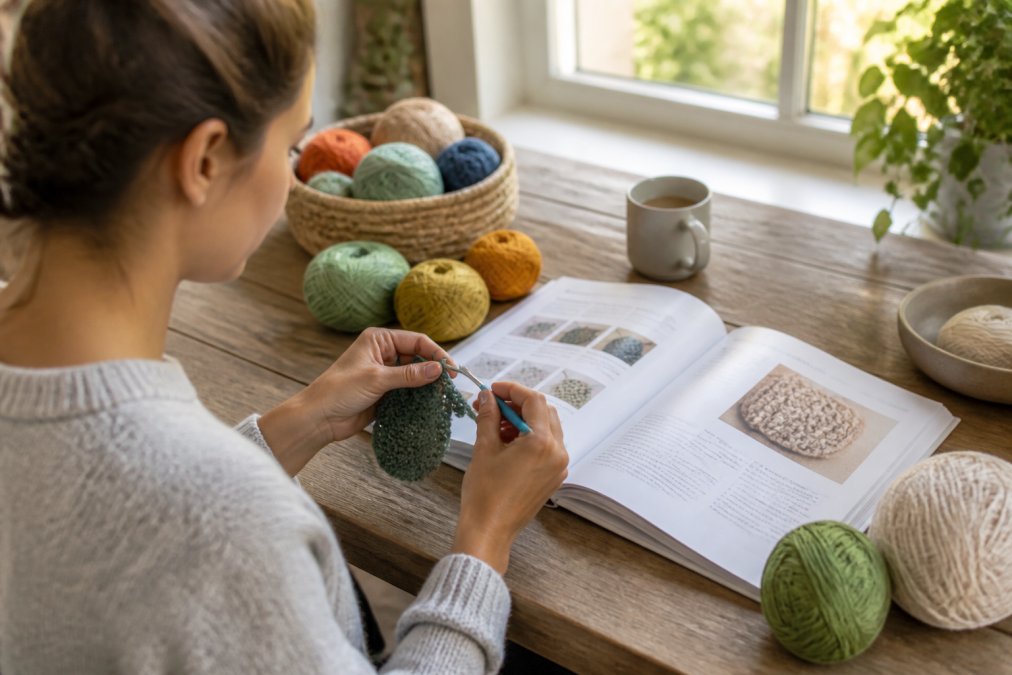
Look for books that include a stitch dictionary section, this reference guide becomes invaluable as you work through patterns. The best beginner books explain US vs. UK crochet terminology upfront, since this confusion trips up new makers constantly. Pattern readability matters enormously. Can you easily distinguish single crochet from double crochet in the written instructions? Are abbreviations explained? Does the book include crochet charts alongside written instructions?
Many beginners benefit from books organized by project type rather than skill level alone. A book structured around granny square variations, for example, lets you master one foundational technique before exploring different applications. This approach builds genuine skill rather than jumping between unrelated stitches.
Physical books excel here because you can reference them while your hands are busy working. You're not switching between your crochet and a screen. The book stays open on your lap or beside your project, and you can easily flip back to review a technique you just learned two pages ago.
Benefits of Digital Crochet Patterns
Digital crochet patterns offer advantages that physical books simply cannot match, especially for crafters managing multiple projects or building a diverse pattern collection. The benefits of digital crochet patterns extend beyond convenience, they reshape how you discover, organize, and execute your work.
Instant access is the most obvious advantage. You decide on a pattern at 10 PM and start the next morning. No shipping delays, no waiting for a book to arrive. For busy crafters managing multiple projects simultaneously, this matters. You can download an amigurumi pattern tonight, a granny square project tomorrow, and a wearable design next week without accumulating physical books.
Searchability transforms how you find what you need. Digital patterns let you filter by yarn weight, skill level, and project type instantly. Looking for a pattern that uses worsted weight yarn and takes under five hours? You can search those criteria in seconds rather than flipping through a book's index. This efficiency appeals especially to intermediate crocheters building a personal pattern library.
Storage efficiency is real. A single folder on your computer holds hundreds of patterns. No shelf space consumed, no physical clutter, no hunting through stacks of books to locate one specific design. For crafters with limited space or those who travel frequently with their projects, digital patterns eliminate a genuine constraint.
Print-on-demand flexibility means you control how you use the pattern. Some crafters print their digital patterns and bind them into custom books. Others print only the pages they need for a specific project. You're not paying for the entire book if you only want three patterns from it.
However, digital patterns require a device at your crafting station. Not everyone wants to reference a laptop or tablet while working. Battery life becomes a factor. Screen glare can strain your eyes during long crafting sessions. These aren't minor issues for people who prefer the tactile, screen-free experience of working from a physical book.
Cost Comparison: Patterns vs. Books
Understanding the financial reality helps you make a decision aligned with your budget and usage patterns. The cost comparison between crochet patterns and craft books isn't straightforward because purchasing habits differ dramatically.
Individual digital patterns typically range from free to $8 per pattern, depending on the designer's experience and pattern complexity (ravelry.com). Bundles of digital patterns often provide better value, five to ten patterns bundled together might cost $15-25, bringing the per-pattern cost down significantly. At Crochet Creations Hub, we offer pattern bundles that let you build a collection affordably while accessing diverse designs.
Physical craft books cost between $15-40 per book depending on publisher, page count, and design quality (bowker.com). A single book typically contains 8-25 patterns. If you use even half the patterns in a book, the per-pattern cost becomes competitive with digital options. But if you purchase a book and only make three patterns from it, you've paid $5-13 per pattern you actually used.
The hidden cost of physical books is space. Bookshelves, storage boxes, and the real estate they consume in your craft room have value. Digital patterns eliminate this cost entirely.
Long-term investment patterns reveal the real difference. A crafter who purchases one new pattern every week spends roughly $416 annually on individual digital patterns, or less with bundle discounts. The same crafter buying one new craft book monthly spends $180-480 annually. Scale this over five years, and the cumulative cost becomes significant.
However, books provide value beyond their per-pattern cost. A quality craft book becomes a reference library you return to repeatedly. You're not just buying individual patterns, you're buying instruction, technique explanation, and inspiration. If a book teaches you five new crochet techniques you apply across dozens of future projects, the investment in that book pays dividends beyond its initial pattern count.
How to Organize Crochet Patterns and Books
Organization determines whether your patterns and books become useful resources or cluttered chaos. The best approach depends on whether you're managing physical books, digital patterns, or a combination of both.
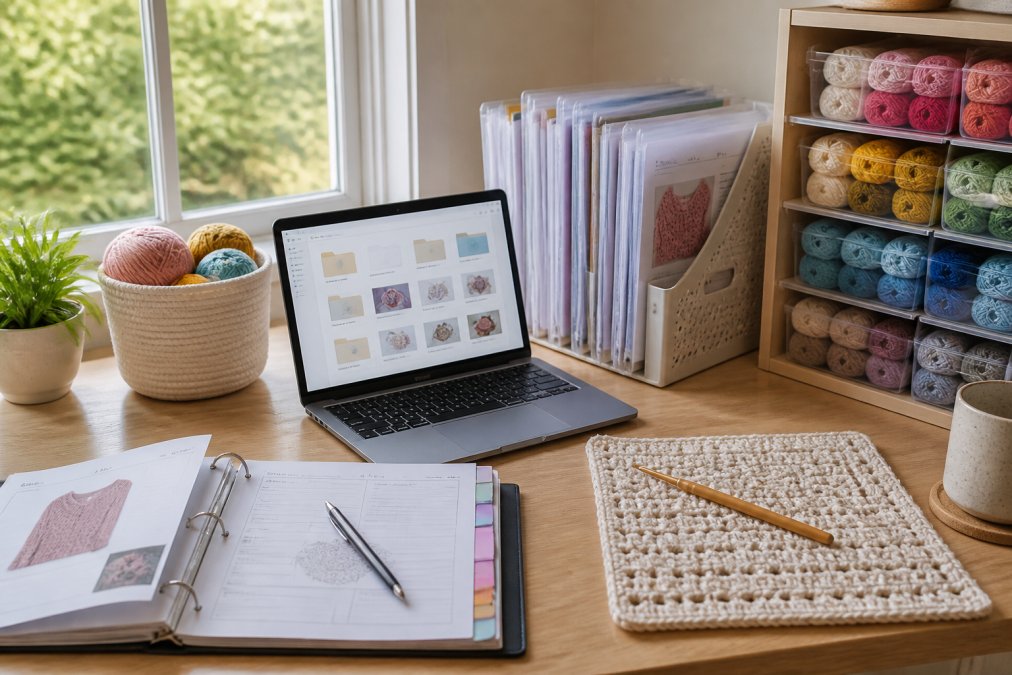
For physical craft books, organize by project category rather than alphabetically. Group books about amigurumi together, wearables together, home decor together. This mirrors how you actually search for patterns, you think "I want to make a blanket" not "I want to find the book starting with B." Use bookends or a small shelf to keep books upright and accessible. Mark your favorite patterns with sticky tabs so you can flip directly to them without searching.
Digital pattern organization requires a consistent folder structure. Create main folders by category: Amigurumi, Wearables, Home Decor, Accessories, Blankets. Within each category, add subfolders by skill level or yarn weight if you accumulate patterns at scale. Name files clearly: "Beginner-Baby-Blanket-Worsted-Weight" tells you everything you need to know without opening the file.
Many crafters benefit from a hybrid approach: physical books for comprehensive reference and foundational technique learning, digital patterns for specific projects and niche designs. This combination gives you the stability of books plus the flexibility of patterns.
A printable crochet planner transforms how you manage active projects. Track which patterns you've started, which yarn you're using, estimated completion dates, and notes about pattern difficulty or modifications you made. The FREE Ultimate Crochet Planner | 120-Page Printable Crochet Journal & Project Planner from Crochet Creations Hub provides exactly this, a 120-page system for organizing projects, tracking yarn inventory, and planning your creative workflow. Many crafters print sections of this planner monthly, creating a living document that keeps their projects visible and intentional.

Digital organization extends beyond folders. Bookmark your favorite pattern sources. Create a spreadsheet tracking which patterns you own, which you've completed, and which are in progress. Some crafters use note-taking apps to record pattern modifications, yarn substitutions, or completion dates. This metadata becomes invaluable when you want to recreate a project or remember which pattern produced that perfect result.
Copyright and Pattern Usage Rights
Understanding pattern copyright protects both you and designers, and it clarifies what you can and cannot do with the patterns you purchase. This matters more than many crafters realize, especially if you're selling finished items or sharing your work online.
When you purchase a crochet pattern, whether digital or in a book, you're buying a license to make items from that pattern for personal use (copyright.gov). You own the finished item you crochet. You do not own the pattern itself, and you don't have the right to reproduce, distribute, or sell the pattern.
The distinction matters for finished goods. Most designers grant you permission to make and sell items created from their patterns, provided you give them credit. If a pattern's terms specify "for personal use only," you cannot sell finished items. Always check the license terms included with your pattern before selling anything you've made.
Sharing your finished work on social media is typically permitted and often encouraged, designers appreciate the visibility. However, sharing the pattern file itself, uploading it to your own website, or distributing it to friends violates copyright. Directing people to where they can purchase the pattern is appropriate. Sharing the actual pattern file is not.
If you modify a pattern significantly, changing stitch types, adjusting proportions, or combining elements from multiple patterns, you may create something original enough to claim as your own design. However, the threshold for "significant modification" is high. Changing yarn weight or hook size doesn't create a new pattern. Redesigning the entire structure and stitch sequence does.
Some designers explicitly allow pattern modification and sharing of modifications. Always read the license. When in doubt, contact the designer and ask. Most are happy to clarify what you can do with their work.
Which Format Should You Choose?
The right choice depends on your skill level, how you work, and what you're trying to accomplish. This decision isn't permanent, many crafters use both formats and choose based on the specific project.
Choose physical craft books if: You're a beginner seeking comprehensive instruction and foundational technique learning. Books provide the structured progression and detailed explanations that accelerate skill development. You prefer working without screens and want a tactile reference you can hold in your lap. You're building a permanent crafting library and want books you'll return to repeatedly over years. You appreciate curated collections, an experienced designer has already selected patterns that work well together and progress logically.
Choose digital crochet patterns if: You want instant access and flexibility in your pattern selection. You're an intermediate crocheter comfortable reading patterns independently and seeking specific designs rather than comprehensive instruction. You have limited physical space and prefer digital organization. You want to experiment with diverse designers and styles without committing to full books. You value the ability to search by specific criteria, yarn weight, skill level, project type, and find exactly what you need quickly.
Choose a combination if: You want the stability of foundational books plus the flexibility of individual patterns. You're building skills systematically through books while exploring creative variations through digital patterns. You want reference materials always available alongside on-demand designs for specific projects.
The most practical approach for many crafters is starting with one or two quality beginner books to build core skills, then expanding into digital patterns as your confidence grows. This gives you the structured learning books provide without overwhelming you with too many options before you've mastered fundamentals.
Frequently Asked Questions
Q: What is the best format for beginners: individual crochet patterns or comprehensive books?
A: Beginners typically benefit from comprehensive craft books because they provide foundational crochet techniques, stitch dictionaries, and step-by-step instructions all in one place. Books teach gauge, yarn weight selection, and crochet terminology systematically. Once you're comfortable with basics, individual digital patterns let you explore specific projects. Many crafters start with a book, then transition to digital patterns for variety and convenience.
Q: How do digital crochet patterns compare to printed books in terms of cost?
A: Digital patterns cost significantly less upfront, individual patterns typically range from $2-$8, while comprehensive craft books cost $15-$35. However, buying multiple patterns adds up. Pattern bundles and subscription services can offer better value if you crochet frequently. Books provide more content per dollar but take up physical space. For budget-conscious crafters, mixing free resources with selective digital pattern purchases often works best.
Q: Are physical craft books better for learning new crochet techniques?
A: Physical craft books excel at teaching techniques because they combine written instructions, stitch diagrams, and visual sequences in an organized, reference-friendly format. You can flip back easily and study crochet terminology without screen fatigue. Digital patterns work well for specific projects once you know the basics. Many intermediate crocheters use books for technique reference and digital patterns for project inspiration.
Q: Is it easier to organize a collection of digital patterns or physical books?
A: Digital patterns are easier to organize if you use a system, folders by skill level, project type, or yarn weight make searching quick. Physical books require shelf space but are easy to browse. A hybrid approach works well: keep reference books on a shelf and use a printable crochet planner (like the Ultimate Crochet Planner) to track digital patterns, project status, and yarn inventory in one place.
Organizing your crochet practice, whether through books, digital patterns, or both, becomes easier when you have tools designed specifically for crafters. The Ultimate Crochet Planner from Crochet Creations Hub helps you track projects, manage your yarn inventory, and plan your creative workflow with a printable system built by makers for makers. Get your free pattern and start organizing your next project today.
This article was written using GrandRanker