

How to Find Crochet Patterns Easily: A Step-by-Step Guide
Table of Contents
- Step 1: Know Where to Start, Best Websites for Free Crochet Patterns
- Step 2: How to Read Crochet Patterns for Beginners
- Step 3: Search Smart, Finding Exactly What You Need
- Step 4: Vet Pattern Quality Before You Download
- Step 5: Crochet Pattern Organization Tips for Your Digital Library
- Step 6: Work with PDF Downloads Effectively
- Common Mistakes to Avoid When Searching for Patterns
- Conclusion
Last Updated: August 24, 2026
Step 1: Know Where to Start, Best Websites for Free Crochet Patterns
Finding quality crochet patterns starts with knowing which websites deliver reliable designs. The internet is flooded with pattern repositories, but many host outdated collections, poorly written instructions, or lack organization tools that make pattern hunting enjoyable.
The best approach is to start with established community spaces and official designer websites. These sources have been vetted by thousands of crocheters and maintain higher standards for pattern clarity and accuracy.
Community Forums and Pattern Repositories
Ravelry stands as the largest community-driven pattern database, hosting hundreds of thousands of designs (ravelry.com). The platform lets you filter patterns by skill level, yarn weight, and project type. What makes Ravelry especially valuable is the user feedback system, real crafters leave notes about pattern difficulty, yarn substitutions, and whether the finished project matched the designer's photos.
AllFreeAmigurumi specializes in stuffed animal patterns and includes step-by-step photo tutorials for many designs, which helps beginners understand construction before committing materials.
Craftsy and similar platforms combine pattern libraries with video tutorials, clarifying written instructions that might otherwise feel confusing.
Official Brand and Designer Websites
Many yarn companies and independent designers publish free patterns directly on their websites. Red Heart, Caron, and Lion Brand all maintain extensive free pattern collections. These official sources typically ensure patterns are written clearly and tested thoroughly.
Independent designers often offer free patterns as lead magnets for their paid collections. A quick search for "[designer name] free patterns" usually surfaces their official site and exclusive designs not available elsewhere.
Step 2: How to Read Crochet Patterns for Beginners
Understanding crochet patterns requires learning the abbreviations, symbols, and structural conventions that initially look like code. Once you decode these elements, patterns become far less intimidating.
The key insight most beginners miss is that crochet patterns aren't meant to be read like prose. Instead, you scan ahead to understand the overall structure, then work through one row or round at a time, referring back constantly.
Decoding Crochet Abbreviations and Symbols
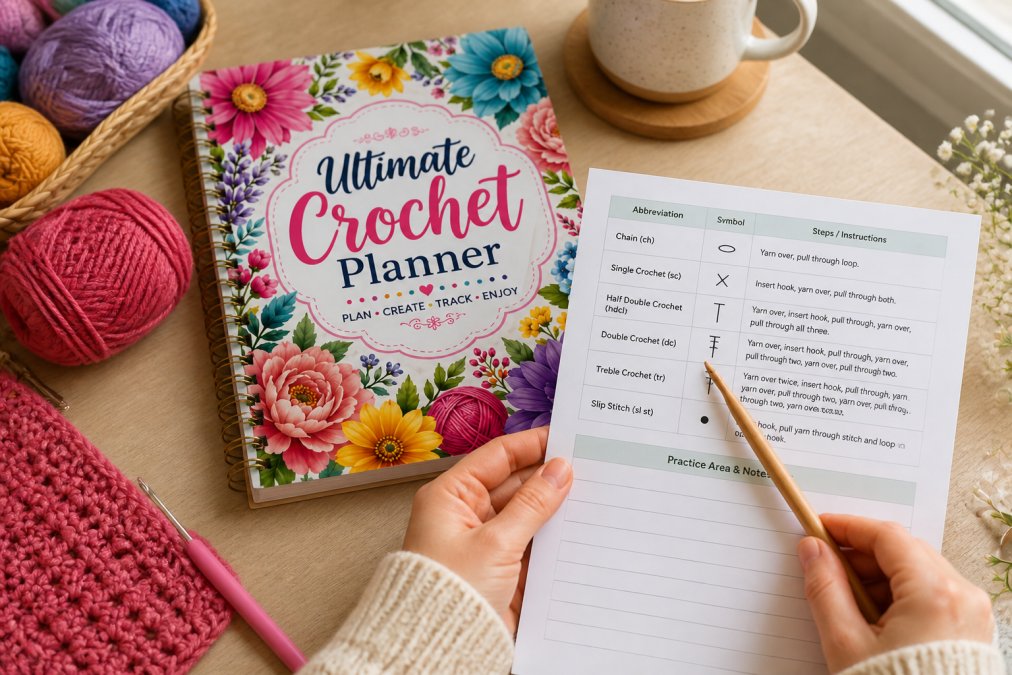
Common abbreviations appear in nearly every pattern: single crochet (sc), double crochet (dc), half double crochet (hdc), treble crochet (tr), chain stitches (ch), slip stitches (sl st), increases (inc), decreases (dec), and yarn overs (yo) (craftyarncouncil.com).
Crochet charts use symbols instead of written abbreviations. Each stitch type has a unique symbol, a small "T" for double crochet, a "+" for chain stitch. Charts are especially useful for visual learners and complex stitch patterns like lace or colorwork. You typically work from bottom to top and right to left, though patterns always specify their direction.
An abbreviation key appears at the beginning of every legitimate pattern. If a pattern doesn't include one, that's a red flag about pattern quality.
Understanding Rows, Rounds, and Stitch Count
Patterns organize instructions in rows (for flat pieces like blankets) or rounds (for circular pieces like hats and amigurumi). Each row or round typically ends with a specific number of stitches, which serves as a checkpoint. If your stitch count doesn't match the pattern's count, you've made an error in that row. Catching it immediately saves frustration later.
Gauge, the number of stitches and rows per inch, determines whether your finished piece matches the pattern's intended size. Testing gauge before starting a large project prevents the disappointment of a finished piece that doesn't fit or drape as intended.
Step 3: Search Smart, Finding Exactly What You Need
Searching for crochet patterns effectively means using advanced filters that let you narrow results by skill level, project type, yarn weight, and estimated time. Combining multiple filter criteria transforms pattern hunting from overwhelming to manageable.
Instead of searching "baby blanket," filter for beginner skill level, worsted weight yarn, and patterns under 20 hours of work. This specificity dramatically reduces results while increasing the likelihood you'll find something suited to your needs.
Using Advanced Search Filters by Skill Level
Pattern difficulty varies widely. Beginner patterns use only basic stitches and straightforward construction. Intermediate patterns introduce color changes, shaping, or complex stitch combinations. Advanced patterns assume comfort with specialized techniques.
Being honest about your skill level saves time and frustration. Many crafters attempt patterns above their ability and abandon projects halfway through. Starting with patterns slightly below your current level builds confidence and helps you practice specific techniques before tackling more complex work.
Most established pattern repositories let you filter by skill level. This single filter eliminates hundreds of unsuitable results immediately.
Searching by Pattern Type and Project
Crochet patterns fall into distinct categories: amigurumi (stuffed animals), garments (sweaters, hats, socks), blankets and afghans, home décor, and accessories. Knowing which category interests you narrows your search significantly.
Within each category, subcategories offer further refinement. Amigurumi patterns might organize by animal type or size. Garment patterns might filter by construction (top-down, bottom-up, seamless) or fit type (fitted, oversized, adjustable).
Project scope matters too. Filtering by estimated completion time helps you find projects that fit your schedule. A quick project suits busy weeks, while a longer pattern works better when you have extended crafting time available.
Step 4: Vet Pattern Quality Before You Download
Not every free pattern available online is worth downloading. Some contain errors, unclear instructions, or inconsistent abbreviations. Evaluating pattern quality before investing your time and materials prevents wasted effort.
Quality patterns share certain characteristics: clear written instructions, accurate stitch counts, and honest difficulty assessments. They include visual aids, photos of the finished project or step-by-step construction images. Most importantly, they've been tested by multiple crafters who've left feedback confirming the pattern works.
Checking for Clear Written Instructions and Visual Aids
The best patterns combine written instructions with visual support. Photos showing the finished project from multiple angles help you understand what the final result should look like. Step-by-step photos demonstrating tricky techniques reduce confusion when written descriptions alone might feel ambiguous.
Crochet charts paired with written instructions serve different learning styles. Patterns offering both formats accommodate more people and demonstrate the designer invested effort in clarity.
Pay attention to how the pattern explains increases, decreases, and color changes. If these instructions feel vague, the pattern likely has other quality issues.
Reading Reviews and Ratings
User reviews provide invaluable insight into whether a pattern actually works as described. Crafters leave notes about errors discovered, yarn substitutions that worked well, and whether the finished project matched the designer's photos.
Look for patterns with dozens of reviews rather than just a few. A pattern with 100 positive reviews from verified crafters offers more reassurance than one with three comments. Patterns consistently rated 4.5 stars or higher have been tested extensively and approved by the crochet community.
Step 5: Crochet Pattern Organization Tips for Your Digital Library
As your pattern collection grows, organization becomes essential. Without a system, you'll accumulate hundreds of PDFs scattered across your computer, making it nearly impossible to find a specific pattern. A thoughtful organization strategy turns your digital library into a useful resource.
The most effective systems combine folder structure with metadata. Create folders by pattern type (amigurumi, blankets, garments, accessories). Within each folder, create subfolders organized by skill level or project size.
Organizing Downloaded PDFs by Type and Difficulty
Start by creating a main folder called "Crochet Patterns" on your computer. Inside, create subfolders for major categories: Amigurumi, Blankets, Garments, Accessories, and Home Décor.
Within each category folder, create additional subfolders for skill level: Beginner, Intermediate, Advanced. This secondary organization makes it easy to find patterns matching your current comfort level.
Use descriptive file names instead of generic ones. Save a file as "Amigurumi_Cactus_Beginner_CCH.pdf" rather than "pattern1.pdf." This naming system includes the pattern type, project name, skill level, and source.

Consider creating a master spreadsheet that lists all your patterns with key information: pattern name, skill level, yarn weight required, estimated hours, and source. This spreadsheet becomes a searchable database.
Using a Crochet Project Planner
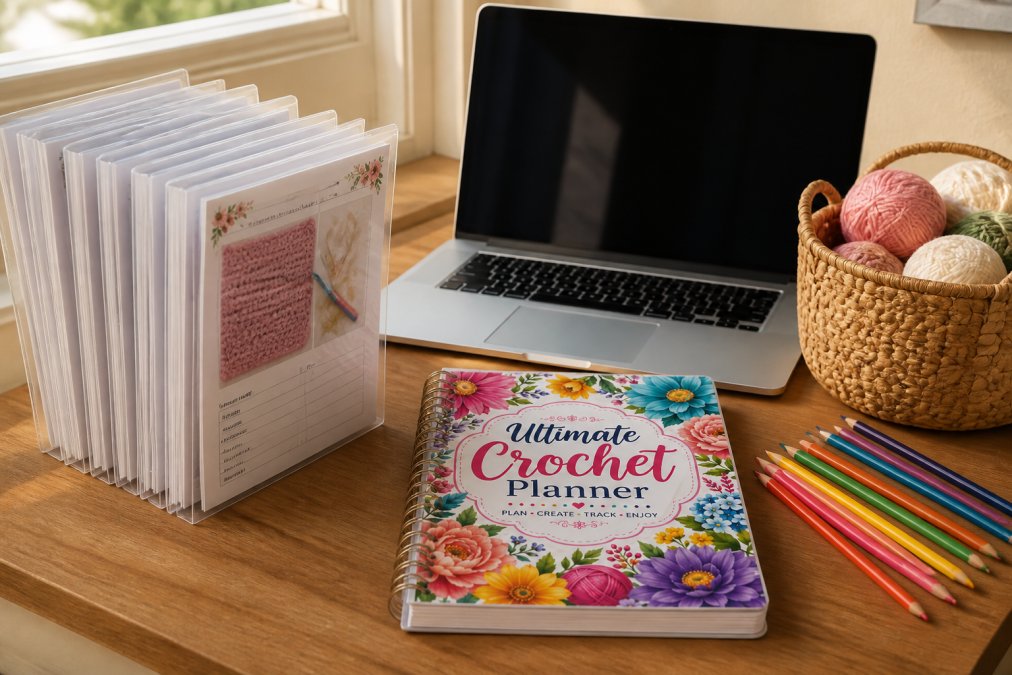
A crochet project planner transforms pattern organization from frustrating to enjoyable. The Ultimate Crochet Planner from Crochet Creations Hub offers a 120-page printable system designed specifically for tracking patterns, projects, and yarn stash (peer-reviewed research). This planner includes dedicated pages for recording pattern details, tracking project progress, and planning yarn purchases.
Using a planner alongside your digital library creates accountability. When you download a new pattern, immediately record it in your planner. This record-keeping prevents duplicate downloads and helps you remember why you saved a particular pattern months earlier.
A planner also helps manage your yarn stash by recording the yarn you own and matching it to patterns that use compatible weights.
Step 6: Work with PDF Downloads Effectively
PDF patterns require specific handling to remain usable long-term. Developing habits around PDF management preserves your pattern library and makes working from patterns more enjoyable.
Before committing to a pattern, preview the PDF if possible. A clear, well-formatted PDF is a pleasure to reference while working. A blurry, poorly scanned PDF creates frustration and potential errors.
Printing Patterns Clearly Without Wasting Paper
Rather than printing an entire multi-page pattern, consider printing only the pages you need for your current work session. If you're working on rows 1-10, print those instruction pages and the stitch count reference.
Adjust your printer settings before printing. Most PDFs print best at actual size (100%) without scaling. Scaling can distort stitch counts and make charts harder to read.
Consider printing on cardstock rather than regular paper. Cardstock withstands repeated handling, spilled drinks, and yarn snags better than standard paper. Many crafters keep their active patterns in plastic sleeves or page protectors.
Digital viewing offers an alternative to printing. If you have a tablet or second device, keeping your PDF open on that device while you crochet eliminates printing entirely. Tablets are especially practical because you can zoom in on specific sections, making small text easier to read.
Managing Multiple Pattern Versions and Yarn Substitutions
Designers sometimes release updated versions of popular patterns, incorporating corrections or clarifications. Check the designer's website occasionally for newer versions to ensure you're working from the most accurate instructions.
When you complete a project using yarn different from what the pattern specified, document your substitution. Add a note to your pattern file or planner recording the yarn you used, how the substitution affected the finished size or drape, and whether you'd make the same choice again.
Keep multiple versions of frequently used patterns. Some crafters maintain a "master" version with all corrections noted, plus a "working" version they mark up while actively crocheting.
Common Mistakes to Avoid When Searching for Patterns
Many crafters repeat the same errors when hunting for crochet patterns, leading to frustration and abandoned projects.
The biggest mistake is choosing patterns based solely on appearance without considering skill level or construction method. A stunning blanket pattern might use advanced techniques you haven't mastered. Instead, choose patterns that challenge you slightly while remaining within your current skill range.
Another common error is ignoring the gauge requirement. Gauge varies significantly between individual crafters, and ignoring it leads to finished pieces that don't fit or drape correctly. Always test gauge before starting a project, especially garments.
Many crafters download patterns impulsively without reading reviews or checking for errors. Taking five minutes to read reviews and preview the actual PDF prevents discovering problems after you've already invested time and materials.
Underestimating project time is another frequent mistake. A pattern estimated at 10 hours often takes longer if you're still building skills. Being realistic about time commitment prevents starting projects you won't finish.
Finally, many crafters don't use any organizational system, leading to digital chaos. Implementing even a simple folder structure prevents this frustration and duplicate downloads.
Finding crochet patterns easily transforms your crafting experience from overwhelming to enjoyable. The strategies in this guide, starting with reliable sources, understanding pattern language, searching strategically, vetting quality, organizing effectively, and handling PDFs properly, work together to simplify every step of the pattern discovery process.
Crochet Creations Hub makes this journey easier with curated pattern collections and the Ultimate Crochet Planner to keep your digital library organized. Whether you're searching for your next amigurumi project or planning a complex blanket, having a system in place ensures you spend less time hunting and more time creating.

Frequently Asked Questions
Where is the best place to find free crochet patterns?
Community forums like Ravelry and Reddit's r/crochet host thousands of free patterns shared by designers and crafters. Many yarn brands publish free patterns on their official websites, and independent designers often offer free samples to showcase their work. Ravelry alone has over 100,000 free patterns you can filter by skill level, yarn weight, and project type. For instant downloads, Crochet Creations Hub offers both free resources and premium patterns starting at just $1.99.
How do I know if a crochet pattern is reliable before I download it?
Check for clear written instructions alongside visual aids like crochet charts or step-by-step photos. Read user reviews and ratings, patterns with consistent positive feedback indicate they've been tested successfully. Look for patterns that include a stitch count, gauge information, and yarn weight specifications. Avoid patterns with vague abbreviations or missing sections. Designer reputation matters too; established pattern creators typically provide detailed support and corrections if issues arise.
What's the best way to organize and save digital crochet patterns?
Create a folder system on your computer organized by project type (amigurumi, blankets, garments), skill level, or yarn weight. Use a printable crochet planner like the free Ultimate Crochet Planner to track which patterns you own, your progress on each project, and yarn substitutions. Name your PDF files clearly with the pattern name and designer. Keep a master spreadsheet or digital catalog with links to where you found each pattern, so you can easily reference or recommend patterns later.
Can I search for crochet patterns by specific criteria like skill level or yarn weight?
Yes. Most pattern databases and websites allow filtering by skill level (beginner, intermediate, advanced), yarn weight, hook size, and project category. Ravelry's advanced search is particularly powerful, you can filter by stitch type, finished dimensions, and even gauge. When searching general terms, add filters like 'beginner-friendly' or 'worsted weight' to narrow results. This saves time and helps you find patterns that actually match your supplies and experience.
This article was written using GrandRanker