

Crochet Pattern Difficulty Levels Explained
Table of Contents
- What Defines Crochet Pattern Difficulty?
- Craft Yarn Council Skill Levels and What They Mean
- How to Read Crochet Patterns for Beginners
- Key Factors That Determine Pattern Complexity
- Beginner Crochet Project Ideas to Build Your Skills
- How to Assess Your Own Crochet Skill Level
- Why Difficulty Ratings Vary and What That Means for You
- Conclusion
Last Updated: August 19, 2026
What Defines Crochet Pattern Difficulty?
Crochet pattern difficulty reflects the technical skills required, stitch complexity, and shaping or finishing demands. Beginner patterns use basic stitches like chain and single crochet with minimal shaping. Advanced patterns layer multiple techniques, colorwork, intricate stitches, precise gauge requirements, and detailed finishing.

Difficulty isn't purely objective. Two crafters with identical experience might find the same pattern easier or harder depending on their strengths, one might excel at reading charts while another prefers written instructions. This is why understanding your own skill level matters as much as understanding how patterns are labeled.
At Crochet Creations Hub, we've seen crafters succeed with patterns rated above their current level when they had strong pattern support and clear instructions. The pattern's clarity, instruction quality, and visual aids can shift difficulty significantly.
Craft Yarn Council Skill Levels and What They Mean
The Craft Yarn Council established a standardized skill level system that most pattern designers follow. Understanding what each level demands helps you pick patterns that match your abilities.
Beginner Level
Beginner crochet means you've learned the fundamentals: how to hold the hook, create a foundation chain, and work basic stitches like single crochet, half double crochet, and double crochet. You understand yarn tension basics and can follow simple written instructions.
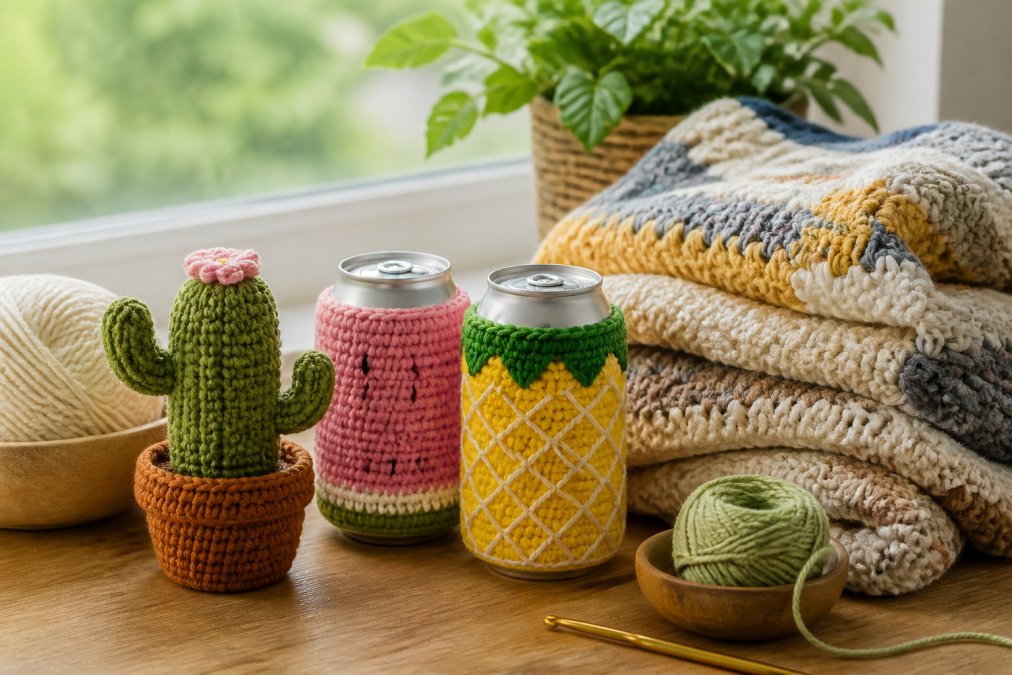
Beginner patterns use only these core stitches, minimal shaping, and straightforward construction. Most projects are flat or simple tubes, blankets, scarves, dishcloths, basic hats. Patterns rarely require increases or decreases, and finishing is minimal. Projects like the Amigurumi Cactus Crochet Pattern from Crochet Creations Hub exemplify this level: clear instructions, straightforward increases, and simple assembly.
What makes beginner patterns accessible is their predictability. Each row follows a consistent pattern, and you're not juggling multiple techniques at once.
Easy Level
Easy crochet patterns assume you're comfortable with all basic stitches and ready for slightly more complex construction. You've made several beginner projects and understand how yarn weight affects finished size and how to troubleshoot basic mistakes.
Easy patterns introduce simple shaping (basic increases and decreases), straightforward colorwork like stripes, and simple repeating stitch patterns. You might encounter abbreviations like "ch-sp" (chain space) or "sk" (skip). Projects often involve more than one stitch type and might ask you to pick up stitches along an edge or attach pieces with a whip stitch. The Fruit Snack Coozie Pack sits comfortably here: basic stitches, simple shaping, and straightforward assembly.

Intermediate Level
Intermediate crochet requires solid foundational skills and comfort with multiple techniques working together. You understand gauge, can read both written patterns and basic crochet charts, and have experience with shaping, seaming, and finishing.
Intermediate patterns layer complexity: multiple stitch types in a single project, more involved shaping to create curves or fitted garments, colorwork requiring multiple yarn colors, and textured stitch patterns demanding attention to detail. You might see abbreviations like "dc2tog" (double crochet two together) or "FPsc" (front post single crochet).
Patterns often involve garment construction with sleeve caps, necklines, or waistbands. You work with pattern charts more frequently, and finishing becomes more visible, your seaming and weaving in of ends affects the final look. Intermediate crafters can handle patterns requiring problem-solving and reasonable adjustments.
Advanced Level
Advanced crochet patterns demand mastery of technique and confidence troubleshooting problems independently. You have years of practice, understand how different yarns and hooks affect outcomes, and can read complex charts and unconventional stitch patterns.
Advanced patterns feature intricate stitch work (lace, cables, complex colorwork), precise gauge requirements that significantly affect fit, complex shaping for tailored garments, and finishing techniques essential to the final appearance. Pattern instructions often assume you know standard abbreviations and techniques. Advanced projects often take months and demand sustained focus, problem-solving skills, and genuine love of the craft.
How to Read Crochet Patterns for Beginners
Learning to read crochet patterns is foundational. Patterns use specialized shorthand that becomes intuitive with practice.
Understanding Abbreviations and Symbols
Crochet patterns use abbreviations to save space and standardize instructions. Common abbreviations include ch (chain), sc (single crochet), hdc (half double crochet), dc (double crochet), sk (skip), and inc (increase). Good patterns include an abbreviation key at the beginning.
Symbols in written patterns indicate special instructions. An asterisk (*) marks where a sequence repeats. Parentheses group stitches together. Learning to recognize these visual cues helps you parse instructions faster. Understanding what the pattern asks you to do with each stitch, "Sc2tog" means single crochet two together, a decrease that pulls two stitches into one, becomes intuitive with practice.
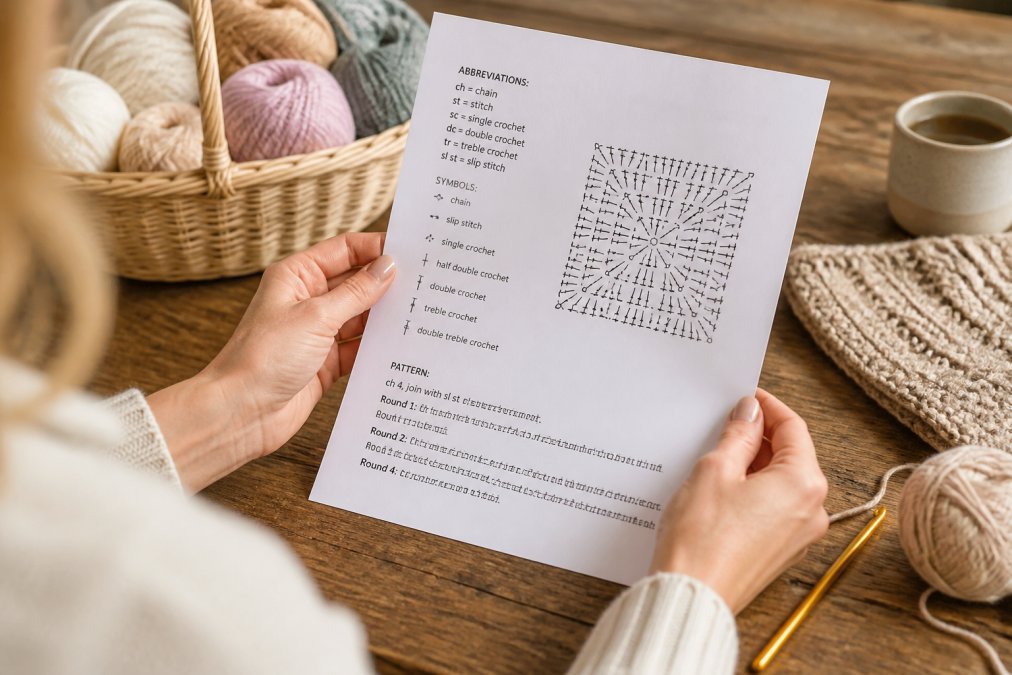
Reading Crochet Charts Versus Written Instructions
Crochet charts use symbols to represent stitches visually. Each symbol represents a specific stitch, and the chart shows exactly where to place each stitch. Charts are read from bottom to top, typically right to left on odd rows and left to right on even rows.
Written instructions describe the same information in words: "Row 1: Ch 20, sc in 2nd ch from hook and in each ch across." Both formats convey identical information; charts are just visual instead of textual. Many crafters prefer one format over the other. Charts work well for visual learners and complex stitch patterns. Written instructions suit sequential thinkers. The best patterns include both, letting you choose your preference.
Key Factors That Determine Pattern Complexity
Several specific elements determine whether a pattern is truly beginner-friendly or demands advanced skills.
Stitch Variety and Technique Requirements
The number of different stitches in a pattern directly affects difficulty. A blanket using only single crochet is beginner-level. A sweater using single crochet, half double crochet, double crochet, treble, and front post double crochet is intermediate or advanced.
Beyond basic stitches, patterns might require specialty techniques: working in the round, changing colors, working into the back loop only, or using post stitches. Each technique adds complexity. Gauge, the number of stitches and rows in a measured space, becomes more critical as patterns grow complex. A beginner blanket might say "gauge doesn't matter much." An intermediate sweater requires precise gauge or the garment won't fit.
Shaping, Colorwork, and Finishing Techniques
Shaping through increases and decreases changes a flat piece into a curved, fitted garment. Simple increases are beginner-level. Strategic decreasing to create armholes or necklines demands intermediate skills. Advanced shaping requires understanding how increases and decreases affect fabric structure.
Colorwork ranges from simple stripes (easy) to complex intarsia or tapestry crochet (advanced). Managing multiple colors while maintaining even tension is a genuine skill requiring practice.
Finishing techniques include seaming pieces together, weaving in yarn ends, adding borders, and blocking. Beginner projects minimize finishing. Intermediate and advanced projects depend on skilled finishing to look polished. A sweater with visible seams that aren't perfectly even looks amateur; the same sweater with invisible seaming looks professional.
Pattern Support and Instruction Clarity
A poorly written advanced pattern might feel impossible. A well-written intermediate pattern with clear instructions, helpful photos, and troubleshooting tips might feel manageable.
Good patterns include: a clear materials list with specific yarn weight and yardage, finished measurements, a stitch abbreviation key, row-by-row or round-by-round instructions, and ideally progress photos showing what each stage should look like. Patterns from Crochet Creations Hub emphasize clarity, providing what you need to succeed.
Patterns lacking these elements are harder to follow regardless of actual stitch complexity. If a pattern doesn't specify yarn weight and you choose the wrong yarn, the finished project won't match the intended design.
Beginner Crochet Project Ideas to Build Your Skills
Starting with the right projects accelerates your learning. Choose projects that let you practice fundamentals without overwhelming you.
Simple blankets using single crochet or half double crochet teach consistent tension and rhythm. Scarves and dishcloths offer the same benefits with quicker completion. These projects build confidence because small tension variations don't derail the final product.
Amigurumi (stuffed toys) introduce shaping and assembly while staying beginner-friendly. The Highland Cow Crochet Pattern and Crochet Jellyfish Amigurumi Pattern from Crochet Creations Hub exemplify this: basic stitches, simple increases and decreases, and straightforward assembly that teaches how pieces fit together.

Hats and simple garments teach you to work in the round and understand fit. Starting with a basic beanie is more manageable than a fitted sweater. Choose projects you genuinely want to make, motivation matters when pushing through learning curves.
How to Assess Your Own Crochet Skill Level
Honest self-assessment prevents frustration. Many crafters overestimate or underestimate their abilities.
Self-Assessment Questions and Diagnostic Checklist
Ask yourself: Can you create a consistent foundation chain without tension issues? Can you maintain even tension throughout a project? Do you understand what "sc in the 2nd ch from hook" means and execute it correctly? Can you follow a written pattern without getting lost? Do you recognize common abbreviations?
Yes answers suggest beginner-level skills. For intermediate assessment: Can you read a basic crochet chart? Can you work increases and decreases intentionally to shape a piece? Have you successfully seamed two pieces together with invisible stitching? Can you manage yarn tension when working multiple colors? Do you understand gauge?
For advanced assessment: Can you troubleshoot pattern problems independently? Do you understand how different yarn weights and hook sizes affect the final product? Can you read complex charts? Have you successfully completed garments that fit well?
A practical diagnostic: Look at a finished project you made. Is it clean and polished, or does it show obvious tension issues, uneven seams, or structural problems? Does it match the intended finished size?
Why Difficulty Ratings Vary and What That Means for You
Pattern difficulty ratings aren't standardized across all designers. One designer's "easy" might be another's "intermediate." Some designers assume familiarity with techniques they don't explicitly explain. Others walk through every step in detail. Some provide extensive photos; others provide none.
Regional terminology also affects how patterns are written. Terms like "treble" mean different things in American versus British crochet. Checking the pattern's origin helps you understand its conventions.
Your personal strengths matter too. If you're naturally good at reading charts, pattern-heavy designs feel easier. If you excel at colorwork but struggle with shaping, you'll find colorwork patterns easier than shaping-heavy garments, even if both are labeled the same difficulty.
Looking at pattern reviews before starting matters. Real crafters share their actual experience. A pattern rated "intermediate" but with comments like "this was harder than expected" gives you useful information the difficulty label alone doesn't provide.
Treat difficulty ratings as starting points, not absolutes. Read the pattern description, check required techniques, look at reviews, and honestly assess whether you have those skills. Trust your judgment over the label.
Choosing the right crochet pattern means matching the pattern's demands to your actual skills while considering the pattern's quality and clarity. Start with projects that excite you but don't overwhelm you. Build skills progressively. Use pattern reviews and clear instruction writing as signals of quality. Remember that difficulty is partly subjective, your strengths, learning style, and the pattern's support system all influence whether a project feels manageable or frustrating. At Crochet Creations Hub, we've curated patterns at every skill level with clear instructions and progress support, making it easier to find your next project with confidence. Browse our collection of beginner-friendly patterns, intermediate designs, and advanced projects to find exactly what matches your current abilities and inspires your next creation.
Frequently Asked Questions
What are the standard crochet skill levels defined by the Craft Yarn Council?
The Craft Yarn Council defines four official skill levels: Beginner (basic stitches only), Easy (simple stitch combinations), Intermediate (varied stitches and techniques), and Advanced (complex shaping, colorwork, and finishing). These standards help pattern designers communicate difficulty consistently and help crafters choose patterns suited to their experience. Understanding these levels prevents frustration from selecting patterns beyond your current abilities.
How do I know if a crochet pattern is suitable for my skill level?
Check the pattern's stated difficulty level first, then review the required stitches and techniques listed. If you recognize most stitches and have completed similar projects, the pattern likely matches your level. Look for patterns with clear instructions and good support (detailed photos or video tutorials). Start with patterns that use stitches you've already mastered, then gradually tackle those introducing one or two new techniques. Our beginner-friendly patterns like the Amigurumi Cactus ($1.99) use only basic stitches and simple shaping.
What makes a crochet pattern considered advanced versus intermediate?
Advanced patterns require complex stitch combinations, intricate colorwork techniques, precise shaping through frequent increases and decreases, and sophisticated finishing methods like seaming or blocking. Intermediate patterns use varied stitches but with simpler construction, basic shaping, and straightforward assembly. Advanced patterns also demand strong tension control, pattern reading skills, and the ability to troubleshoot mistakes independently. If a pattern includes techniques you've never attempted, it's likely above your current level.
Why do different crochet designers rate pattern difficulty differently?
Difficulty ratings depend on a designer's assumptions about their audience and which techniques they consider standard. Some designers assume crafters know advanced abbreviations or specialized stitches; others provide extensive written-out instructions. Pattern support quality also varies, detailed photos and video tutorials can make a complex pattern feel easier. Additionally, what feels difficult depends on your experience with specific techniques like colorwork or amigurumi construction. This is why assessing patterns against your own skill checklist matters more than relying solely on stated difficulty.
This article was written using GrandRanker