

Easy Crochet Patterns for Beginners: 10 Projects to Start With
Table of Contents
- What Makes a Crochet Pattern Beginner-Friendly
- Essential Crochet Tools for Beginners
- Quick Comparison: Our Top Beginner Patterns
- 1. Easy Peasy Crochet Baby Blanket Pattern
- 2. Highland Cow Crochet Pattern
- 3. Crochet Cute Turtle Pattern
- 4. Baby Booties Crochet Pattern
- 5. Cascading Ripples Baby Blanket Pattern
Last Updated: August 17, 2026
What Makes a Crochet Pattern Beginner-Friendly
A beginner-friendly crochet pattern combines simplicity with achievable results using basic stitches like single crochet, double crochet, and slip knots rather than complex techniques. Real beginner patterns acknowledge what you don't know yet and guide you through it with clear written instructions, minimal color changes, and straightforward shaping.
The patterns that work best for new crocheters have finished sizes that feel rewarding, a small amigurumi toy finished in 4 hours teaches confidence better than a 40-hour blanket. They use forgiving yarn weights like worsted weight that hide tension inconsistencies, and they deliver visual payoff quickly to maintain motivation.
At Crochet Creations Hub, we've built our collection around this philosophy: beginner patterns should feel achievable, not overwhelming. This guide covers the essential tools you need, the patterns that actually work for newcomers, and the techniques that separate successful first projects from abandoned yarn stashes.
Essential Crochet Tools for Beginners
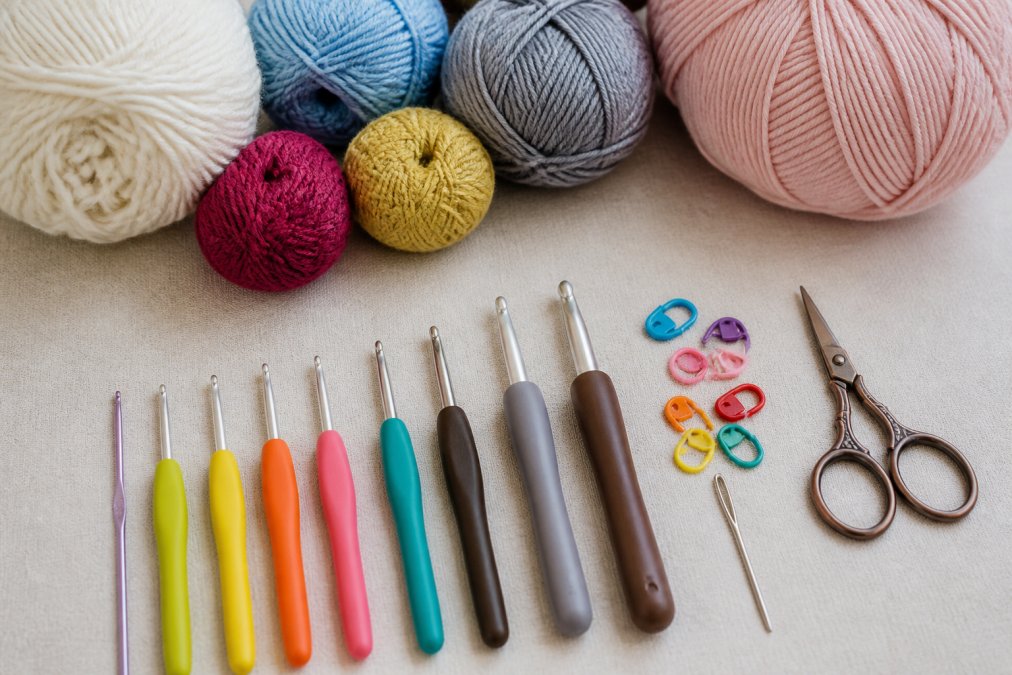
Starting crochet requires surprisingly few supplies: a crochet hook, yarn, a tapestry needle for weaving in ends, stitch markers, and scissors.
Beginners should start with a 5.5 mm to 6 mm hook paired with worsted weight yarn. This combination feels comfortable, creates stitches large enough to see and fix mistakes, and lets you practice tension control without fighting the yarn. Avoid thin yarn like sport or fingering weight until you've completed at least one full project, it magnifies every tension mistake.
Worsted weight yarn (also called #4 weight) is the sweet spot for learning. It's thick enough that your stitches stay visible and forgiving when your tension wavers. A basic 6 mm aluminum hook costs a few dollars and works just as well as a $20 ergonomic version while you're learning. Once you've finished your first project, you'll understand which tools actually improve your experience.
Quick Comparison: Our Top Beginner Patterns
| Pattern Name | Finished Size | Stitches Used | Time to Complete | Best For |
|---|---|---|---|---|
| Easy Peasy Baby Blanket | 40" × 40" | Chain, double crochet, slip stitch | 15-20 hours | First blanket project |
| Highland Cow Amigurumi | 4-5" tall | Single crochet, increases, decreases | 4-6 hours | Stuffed animal beginner |
| Crochet Turtle | 4" | Single crochet, basic shaping | 3-4 hours | Quick confidence builder |
| Baby Booties | One pair | Single crochet, half double crochet | 2-3 hours per bootie | Wearable gift project |
| Cascading Ripples Blanket | 36" × 36" | Double crochet, ripple pattern | 12-15 hours | Pattern variation practice |
1. Easy Peasy Crochet Baby Blanket Pattern
This is where most beginners should start. The Easy Peasy Crochet Baby Blanket uses only three basic stitches: chain, double crochet, and slip stitch. The pattern repeats the same sequence row after row, so muscle memory takes over and your hands know what to do without constant pattern checking.

The finished blanket measures 40 inches by 40 inches, substantial without being overwhelming. Most crocheters complete this blanket in 15-20 hours of actual work. What makes this pattern genuinely beginner-friendly is how it teaches tension. The double crochet stitch is forgiving, and early rows where your tension is tight or loose blend seamlessly into later rows as you relax and find your rhythm.
The materials list is minimal: worsted weight yarn in your chosen color and a 6 mm hook. The Easy Peasy Crochet Baby Blanket Pattern from Crochet Creations Hub is available as an instant digital download for $1.99.
2. Highland Cow Crochet Pattern
Once you've mastered a flat blanket, the Highland Cow introduces shaping and stuffing. This amigurumi-style pattern uses single crochet in continuous rounds and teaches how to increase and decrease stitches to create 3D shapes.

The finished cow stands about 4-5 inches tall with shaggy yarn hair, curved horns, and a soft rounded muzzle. It looks far more complex than it actually is. The pattern includes guidance on hair attachment and assembly, teaching finishing techniques beyond weaving in ends. You'll learn how to sew crochet pieces together, attach safety eyes, and stuff evenly so your finished toy looks professional.
Most crocheters complete this project in 4-6 hours. The Highland Cow Crochet Pattern from Crochet Creations Hub costs $1.99 and includes step-by-step written instructions plus assembly guidance.
3. Crochet Cute Turtle Pattern
The turtle pattern is your confidence builder. At just 4 inches finished, it's small enough to complete in an afternoon, yet detailed enough to feel like a real accomplishment.
This pattern uses basic single crochet stitches worked in the round, similar to the Highland Cow but simpler and faster. You'll practice increases and decreases, stuffing techniques, and eye attachment without the time investment of a larger project. Completing a finished toy in 3-4 hours creates momentum and confidence that you can follow a pattern and create something worth keeping or gifting.
The turtle also teaches color work. The pattern uses multiple yarn colors for the shell, eyes, and body, teaching you how to change yarn mid-pattern, a skill that unlocks hundreds of more complex designs.

The Crochet Cute Turtle Pattern from Crochet Creations Hub is $1.99 and includes materials list, step-by-step instructions, and assembly guidance.
4. Baby Booties Crochet Pattern
Baby booties represent your first wearable project. Unlike blankets and toys, these are functional items that someone will actually use. These booties come in three sizes: 3 months, 6 months, and 12 months, with a classic ribbed cuff and timeless design.
The ribbed cuff teaches a new stitch technique (half double crochet worked in back loops only) that creates vertical texture. What beginners learn from booties is sizing and fit. The pattern includes guidance on how to adjust if your gauge is off, crucial knowledge for moving beyond simple patterns to more complex projects where fit matters.
Most crocheters complete one bootie in 2-3 hours. The Baby Booties Crochet Pattern from Crochet Creations Hub includes all three sizes in one download for $1.99.
5. Cascading Ripples Baby Blanket Pattern
The Cascading Ripples blanket introduces pattern variation without overwhelming complexity. The ripple stitch combines increases and decreases in a specific sequence to create waves. Once you understand the rhythm, your hands work on autopilot, but the visual result is far more sophisticated than a flat blanket.
This pattern teaches you to read and follow more complex instructions. The ripple sequence is longer than a basic double crochet repeat, requiring you to track where you are in the pattern and understand how increases and decreases work together. These skills are essential for moving beyond beginner patterns.
The finished blanket is 36 inches by 36 inches and takes 12-15 hours to complete. The pattern uses baby weight yarn in four coordinating colors, teaching you how to manage color changes across a large project and weave in numerous ends.
The Cascading Ripples Baby Blanket Pattern from Crochet Creations Hub is available for $1.99 as an instant digital download.
Common Beginner Mistakes to Avoid
The most common mistake beginners make is pulling yarn too tightly. Tight tension creates stiff, uncomfortable fabric that's difficult to work with. The yarn should flow through your fingers loosely, and your hand position should feel relaxed. If your fingers hurt after 30 minutes, your tension is too tight.
The second common mistake is misunderstanding gauge. Gauge is the number of stitches and rows in a specific measurement (usually 4 inches). Before starting any pattern, crochet a small gauge swatch using the recommended hook and yarn. If your gauge doesn't match the pattern, change your hook size. A smaller hook creates tighter stitches; a larger hook creates looser stitches.
The third mistake is frogging (ripping out) too aggressively. Many beginner mistakes are invisible in the finished project or easily fixed with a tapestry needle after you've finished. Learn to distinguish between mistakes that matter and mistakes that don't.
A fourth issue is inconsistent tension between different sections. Your first few rows are tight because you're concentrating hard, while your middle rows relax as you find your rhythm. The fix is practice and awareness. Crochet slowly enough to maintain consistent tension throughout.
Finally, beginners often skip finishing steps. Weaving in ends neatly, blocking your finished project, and proper assembly transform a handmade piece from looking homemade to looking professional.
How to Read a Crochet Pattern
Crochet patterns use abbreviations and specialized terminology. The most common abbreviations are: ch (chain), sc (single crochet), dc (double crochet), hdc (half double crochet), tr (treble crochet), sl st (slip stitch), inc (increase), dec (decrease), and st/sts (stitch/stitches). Every pattern includes an abbreviation key.
Patterns use asterisks and parentheses to show repeating sections. An instruction like "sc 3, dc 2, sc 1, dc 1 repeat from * across" means you single crochet 3 stitches, double crochet 2 stitches, then repeat the single crochet 1, double crochet 1 sequence until you reach the end of the row.
Turning chains are essential. At the end of each row, you need to chain a specific number of stitches before turning to work the next row. A single crochet row needs 1 turning chain; a double crochet row needs 3 turning chains.
Gauge information appears near the beginning of every pattern and specifies how many stitches and rows fit in 4 inches. This is the single most important piece of information in the pattern. The materials list tells you yarn weight, yardage needed, hook size, and any notions. Don't substitute yarn weight without understanding how it affects the finished project.
Tips for Beginner Crocheters
Start with patterns that use a single yarn color. Complete at least two single-color projects before tackling color changes.
Keep your first projects small. Smaller projects finish faster, giving you confidence and motivation. A completed 4-inch toy teaches you more than an abandoned 40-inch blanket.
Don't compare your early work to finished projects made by experienced crocheters. Your first blanket won't look perfect, but that's normal. Every crocheter started exactly where you are.
Join a crochet community. Online forums, local groups, and social media communities offer support, pattern recommendations, and troubleshooting help.
Invest in a good light source. Poor lighting makes it hard to see your stitches, increasing mistakes and eye strain.
Keep a project journal. Write down which patterns you've made, which yarn you used, how long it took, and what you learned. This reference guide helps you remember what works and what doesn't.
Building Your Crochet Pattern Collection
Starting with these five patterns gives you a foundation in blankets, amigurumi, wearables, and pattern variation. After completing these projects, you'll understand your skill level and what types of projects you enjoy most.
Crochet Creations Hub offers all these patterns as instant digital downloads, each priced at $1.99. The printable PDF format means you can access your patterns immediately after purchase.
The key to progressing as a crocheter is choosing projects slightly above your current skill level. If you only make patterns you've already mastered, you stop learning. If you jump to patterns that are too advanced, you get frustrated. The sweet spot is patterns that introduce one or two new techniques while building on skills you've already practiced.
After these five beginner patterns, consider exploring amigurumi animals, simple hats, market bags, and small home décor projects. Each category teaches new techniques while remaining accessible to intermediate crocheters.
Frequently Asked Questions
What is the easiest crochet pattern for beginners?
The easiest crochet patterns for beginners use basic stitches like single crochet and double crochet with simple repeating patterns. The Easy Peasy Crochet Baby Blanket Pattern is an excellent starting point, it uses just chain, double crochet, and slip stitch stitches in a straightforward repeating pattern. Projects that work up quickly, like the Brighten Your Day Rainbow Stuffie, keep you motivated by showing visible progress within a few hours of work.
What supplies do I need to start crocheting?
Begin with essential crochet tools for beginners: a crochet hook (typically 4-6 mm for beginners), worsted weight yarn, a yarn needle for weaving in ends, stitch markers to track your place, and scissors. Most beginner patterns cost $1.99 for digital downloads. A single ball of yarn costs $3-8 depending on weight and fiber. You don't need expensive supplies, quality basics are affordable and sufficient to complete your first projects successfully.
How do I choose the right yarn for beginner crochet projects?
Start with worsted weight yarn (also called medium or #4 weight), it's thick enough to see your stitches clearly, making mistakes easy to spot. Light colors help you see stitch definition better than dark shades. Acrylic yarn is budget-friendly and forgiving for practice. Check your pattern's materials list for specific recommendations. Avoid fuzzy or novelty yarns initially, as they hide stitches and make tension harder to control.
Can I really learn to crochet from a digital pattern?
Yes. Digital crochet patterns include step-by-step written instructions, materials lists, and stitch abbreviations. Pair your pattern with video tutorials on YouTube for visual guidance on basic stitches like single crochet and double crochet. Most beginners succeed by working through one simple pattern first, then moving to the next. Our patterns are designed to be printable and easy to follow at your own pace, with clear instructions for each step.
Starting your crochet journey doesn't require expensive tools or complicated patterns. The Easy Peasy Crochet Baby Blanket, Highland Cow, Crochet Cute Turtle, Baby Booties, and Cascading Ripples Blanket give you a complete learning path from absolute beginner to confident intermediate crocheter. Each pattern teaches specific techniques while delivering finished projects you'll treasure. Get your free pattern from Crochet Creations Hub and begin your creative journey today.
This article was written using GrandRanker