

How to Start a Crochet Business From Home
Table of Contents
- Choose Your Niche and Product Line
- How to Price Crochet Items for Profit
- Profitable Crochet Items to Sell
- Crochet Business Legal Requirements
- Best Platforms to Sell Handmade Crochet
- Build Your Brand and Market Your Crochet Business
- Scale Your Crochet Business From Home
Last Updated: August 27, 2026
Choose Your Niche and Product Line
Starting a crochet business from home begins with identifying a specific niche that combines your skills with market demand. Your niche is the intersection of your skill level, genuine interest, and what customers actually want to buy.
Start by auditing what you already make well. Do you excel at blankets, garments, accessories, home décor, or stuffed animals? Within each category, there are subcategories, baby blankets, weighted blankets, temperature-regulating blankets, or decorative throws. The specificity matters because it shapes your marketing, pricing, and production workflow.
Research what's actually selling by looking at platforms where handmade crochet items are listed. Notice which products have reviews, customer photos, and regular sales. A common mistake is assuming your favorite project type is what customers want. Market research corrects that assumption before you've invested time and materials.
Consider your production capacity. If you choose a niche requiring intricate work taking 20 hours per item, you'll struggle to scale. If you pick something you can produce in 3-5 hours, you have flexibility to grow. Time directly affects your profit margins and ability to meet seasonal demand.
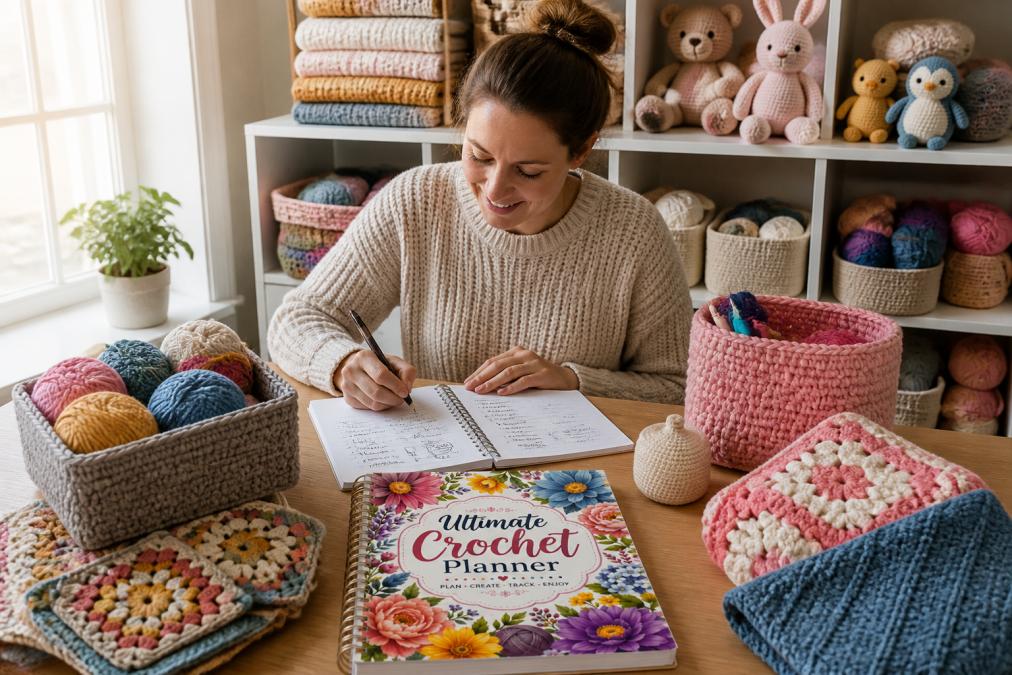
Document your niche choice clearly: the specific product type, target customer, why this niche suits your skills, and what makes it different from generic crochet items. This becomes your foundation for pricing, marketing, and scaling decisions.
How to Price Crochet Items for Profit
Pricing handmade crochet items is where most home crafters leave money on the table. The correct formula accounts for four components: materials, labor, overhead, and profit margin.
Materials are straightforward, add up yarn, thread, buttons, and supplies per item. Labor is where people hesitate. Calculate how long each item takes, then assign an hourly rate.
Overhead includes platform fees, packaging, shipping supplies, business insurance, accounting software, and utilities. Calculate your monthly overhead, then divide by expected monthly sales. That's your per-item overhead cost.
Aim for a healthy profit margin on handmade items. This accounts for unsold inventory, returns, refunds, and business unpredictability.
Here's a practical example: A crochet market bag takes 4 hours to make. Materials cost $8. Your hourly rate is $20. Overhead per item is $3.

Materials: $8 Labor (4 hours × $20): $80 Overhead: $3 Subtotal: $91 Profit margin (50%): $91 Retail price: $182
Higher prices can attract customers who value quality. Test your pricing by starting slightly lower than you think is right, then increasing by 10-15% every few months. Track which price points move inventory fastest and generate the best profit.
Profitable Crochet Items to Sell
The most profitable crochet items often take a moderate amount of time to produce and solve a specific problem or fill a specific need for the customer.
Baby blankets rank high on the profitability scale. They're gift-appropriate, have seasonal demand, and customers expect to pay for quality handmade work.
Market bags and tote bags are profitable because they're functional. A well-made market bag can be a popular item.
Amigurumi (stuffed crochet animals) appeal to collectors and gift-givers. Small amigurumi can be popular items. Larger or more complex designs command higher prices.
Weighted blankets and temperature-regulating blankets command premium prices because they solve problems.
Digital patterns and tutorials represent passive income. Once created, they sell repeatedly with zero production time and high profit margins.
Analyze your inventory by calculating profit per hour worked. Items generating less than optimal profit per hour should either be repriced, simplified, or removed from your product line.
Crochet Business Legal Requirements
A crochet business from home requires legal structure, tax compliance, and proper documentation.
A sole proprietorship is the simplest option, your business income flows through your personal tax return with minimal paperwork and no filing fees in most states. An LLC (Limited Liability Company) provides liability protection, costing $50-300 depending on your state (sba.gov).
Obtain a business license. Requirements vary by state and locality. Contact your state's Secretary of State office or local business licensing office. The process typically takes a few days and costs $25-100 (sba.gov).
Register for sales tax if your state requires it. Most states charge sales tax on handmade goods sold within the state. Check your state's Department of Revenue website for specifics.
Keep detailed records of income and expenses. Track materials purchased, shipping costs, platform fees, and other business expenses. These deductions reduce your taxable income. The Ultimate Crochet Planner from Crochet Creations Hub includes sections for tracking expenses and income.

As a self-employed crocheter, you're responsible for paying self-employment tax and income tax on your profits. Set aside a portion of your income for taxes. Consult a tax professional to understand your specific obligations.
Obtain business liability insurance. Homeowners insurance typically doesn't cover business activities.
Best Platforms to Sell Handmade Crochet
Where you sell your crochet items dramatically affects your reach, fees, and customer base.
Etsy is a dominant marketplace for handmade goods with built-in traffic from millions of shoppers. Listing fees are $0.20 per item, plus a 6.5% transaction fee and 3% + $0.20 payment processing fee (etsy.com). The downside is competing with thousands of other crochet sellers.
Shopify lets you build your own e-commerce store with full control over design and branding. It charges $29-299 per month plus 2.7% + $0.30 per transaction. You handle customer service, shipping, and marketing. It's ideal once you have consistent traffic.
Facebook Marketplace and Instagram Shopping are free ways to reach local and social media audiences with no platform fees, though you handle all logistics.
Craft fairs and farmers markets provide in-person sales opportunities. You rent booth space (typically $25-100 per day) and keep 100% of sales, but have travel and setup costs.
A hybrid approach works best: use Etsy or Facebook for initial traffic, then gradually transition customers to your own channels as your brand grows.
Build Your Brand and Market Your Crochet Business
A recognizable brand differentiates your crochet items from thousands of competitors. Start with a clear brand voice that matches your target customer.
Develop a consistent visual identity including your color palette, photography style, logo, and packaging. When customers see your items, they should immediately recognize them as yours.
Product photography is critical since most crochet sales happen online. Invest in good lighting, photograph items on models or in lifestyle settings, show details and multiple angles.
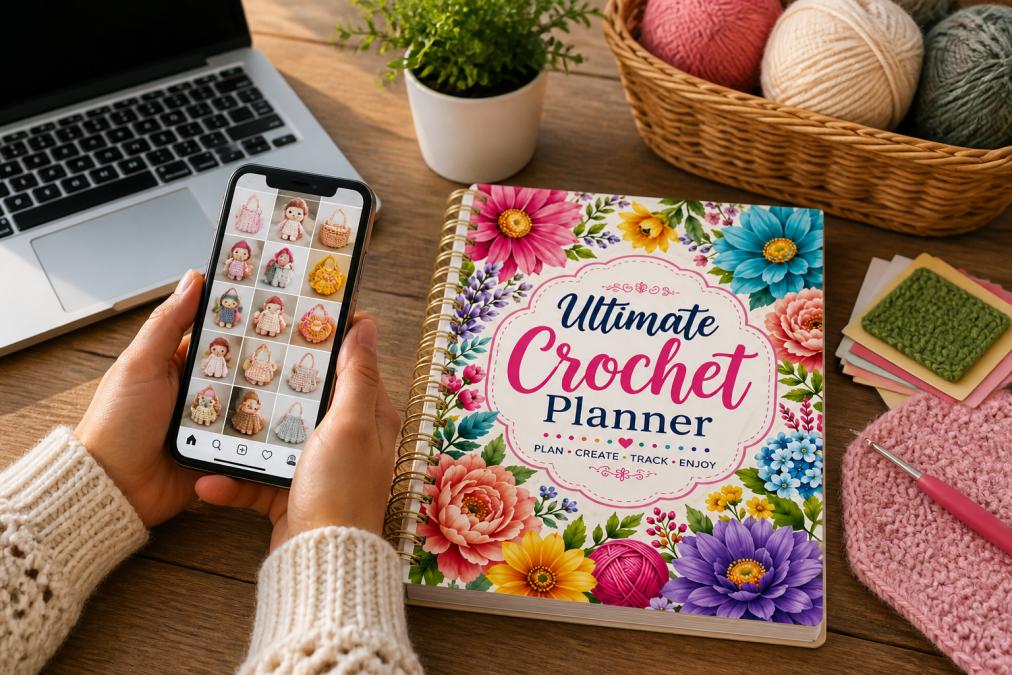
Instagram and TikTok are ideal for visual crafts like crochet. Post consistently, at least 3-4 times per week. Show the process, not just finished items. Behind-the-scenes content builds connection with followers. Use relevant hashtags to increase discoverability.
Engage with your audience by responding to comments and messages promptly. Email marketing keeps customers coming back, ask for email addresses at purchase and send occasional emails about new products or special offers.
Content marketing like blog posts, tutorials, or tips positions you as an expert. Collaborate with other makers or complementary businesses to expand your reach.
Scale Your Crochet Business From Home
Scaling means increasing production and revenue without proportionally increasing your time and effort.
First, identify your bottleneck. Is it production time, sales volume, or business management? If you're making everything yourself and can't keep up with demand, increase your hourly production rate or delegate some work.
Batch similar tasks, cut all yarn, then assemble all items, then package all orders. This is faster than completing each item individually. Set up a dedicated workspace with all materials organized and accessible.
Create product variations that require less time. Offer semi-custom options (choose color from 5 pre-selected options) that take less time.
Develop passive income streams. Digital patterns, tutorials, and crochet planners generate revenue without ongoing production time. Crochet Creations Hub's Ultimate Crochet Planner is available as a free download or paid version at $1.99.
Consider outsourcing non-production tasks like customer service, shipping, or bookkeeping.
Wholesale your items to boutiques or gift shops. Sell items to a retailer at wholesale pricing (typically 40-50% of retail) for larger revenue per transaction.
Teach workshops or classes. Online crochet classes generate revenue from your knowledge rather than your hands.
Raise your prices. As demand increases, higher prices can reduce demand to match your capacity while increasing profit per item.
Document your processes and systems. Written instructions for how you make items, package orders, and handle customer service make delegation possible. The Ultimate Crochet Planner helps you track processes and maintain organization as complexity increases.

Starting a crochet business from home is achievable with clear planning around niche selection, pricing strategy, and platform choice. Legal and financial foundations protect your business and personal finances as you grow. Build your brand through consistent visual identity and authentic customer engagement. As revenue increases, focus on efficiency and passive income rather than simply working more hours. Get your free Ultimate Crochet Planner from Crochet Creations Hub to organize your business planning, track projects, and manage the operational details that separate hobby crafters from profitable businesses.
Frequently Asked Questions
Q: Is a crochet business profitable?
A: Yes, a crochet business can be profitable if you price strategically and manage costs carefully. Profitability depends on your niche, production time, material costs, and sales volume. Start by calculating your cost of goods sold and labor costs to determine realistic pricing that covers expenses and provides fair compensation.
Q: Do I need a business license to sell crochet items from home?
A: Yes, you typically need a business license to legally sell crochet items from home. Requirements vary by state and local jurisdiction. Most states require you to register a sole proprietorship or LLC, obtain an Employer Identification Number (EIN) from the IRS, and collect sales tax on applicable sales. Check with your state's Secretary of State office and local county clerk for specific requirements in your area.
Q: What platforms are best for selling handmade crochet goods?
A: The best platforms depend on your target audience and business model. Etsy is ideal for reaching buyers seeking handmade items and offers built-in payment processing. Shopify lets you build a branded storefront with more control. Social media platforms like Instagram and Facebook are excellent for marketing and direct sales. Many successful crafters use multiple platforms simultaneously to maximize reach and diversify their customer base.
Q: How do I stay organized while running a crochet business from home?
A: Organization tools like the Ultimate Crochet Planner help you track projects, inventory, and income in one place. A planner lets you monitor yarn stash, project deadlines, and customer orders so nothing slips through the cracks. Separate your business finances from personal accounts, track time spent on each project, and maintain a simple spreadsheet or accounting software for expenses and revenue. This keeps you accountable and helps you identify which items are most profitable.
This article was written using GrandRanker