

Brunaticality Alternatives: Best Crochet Pattern Sites 2026
Table of Contents
- Why Crocheters Switch From Brunaticality
- Best Crochet Pattern Sites 2026
- Best Crochet Designers for Amigurumi
- How to Read Crochet Patterns and Evaluate Quality
- Beginner-Friendly Pattern Sources
- Where to Find Free Crochet Patterns
- Comparing Paid vs. Free Crochet Patterns
- Mobile-First Pattern Accessibility and User Reviews
Last Updated: August 28, 2026
Why Crocheters Switch From Brunaticality
Crochet pattern alternatives have exploded in popularity because the landscape has fundamentally shifted. While Brunaticality built a loyal following, many intermediate and advanced crocheters find its limitations, slower updates, higher prices, and narrower design focus no longer match their needs. Independent designers now offer comparable quality at lower prices. Community-driven platforms provide access to thousands of tested patterns. Video tutorials have accelerated learning. The real shift isn't that crocheters are abandoning pattern sites, they're becoming more selective, mixing resources: a paid pattern from a specialized designer, community feedback, video walkthroughs, and yarn substitution advice all in one session.
Best Crochet Pattern Sites 2026
Finding reliable best crochet pattern sites 2026 requires understanding what makes a platform trustworthy: clear written instructions, worked photos showing construction steps, responsive designer support, and community validation through user reviews. Pattern quality varies dramatically, and low price means nothing if instructions are unclear or the finished product doesn't match photos.

Digital Pattern Marketplaces
Digital pattern marketplaces have become the dominant way crocheters source designs. These platforms handle payment, delivery, and customer support, providing instant access and clear refund policies. Crochet Creations Hub operates as a curated digital marketplace, offering premium patterns at $1.99 each with instant downloads and beginner-friendly to intermediate designs. The platform emphasizes high-quality written instructions paired with step-by-step photographs.
Other major digital marketplaces include Etsy (widest selection but requires vetting), Craftsy (bundles patterns with video tutorials), and Ravelry's pattern shop (integrates community database with detailed reviews and project photos). The key advantage is instant gratification: purchase a pattern and have a PDF within seconds. For busy crafters, this convenience justifies the small cost.
Community-Driven Pattern Databases
Ravelry stands out as the largest fiber arts social network where makers upload project photos, leave detailed notes about modifications, and rate patterns based on accuracy and clarity. Before purchasing a paid pattern, you can search Ravelry to see how others experienced it. Reddit communities like r/crochet function as informal pattern databases, sharing free patterns and providing community feedback that quickly identifies low-quality designs.
These databases solve a critical problem: pattern testing. Community feedback tells you whether a pattern is actually "beginner friendly" or whether experienced makers found it confusing. This real-world validation is invaluable.
Video Tutorials and Written Patterns
The best approach combines both video tutorials and written patterns. Video tutorials show actual hand movements and tension required for stitches. Written patterns provide reference guides you can follow stitch-by-stitch without rewinding. Many paid pattern designers now include video links inside PDFs, combining both formats. This hybrid approach works because it meets different learning styles, some crocheters learn faster by watching, others prefer reading at their own pace.
Best Crochet Designers for Amigurumi
Amigurumi, small stuffed crochet toys, has become one of the most popular crochet categories. The quality gap between designers is enormous. A well-designed pattern produces toys with proper proportions, secure seams, and professional appearance. A poorly designed pattern leaves lumpy shapes and loose stuffing.
Independent Designers and Ethical Sourcing
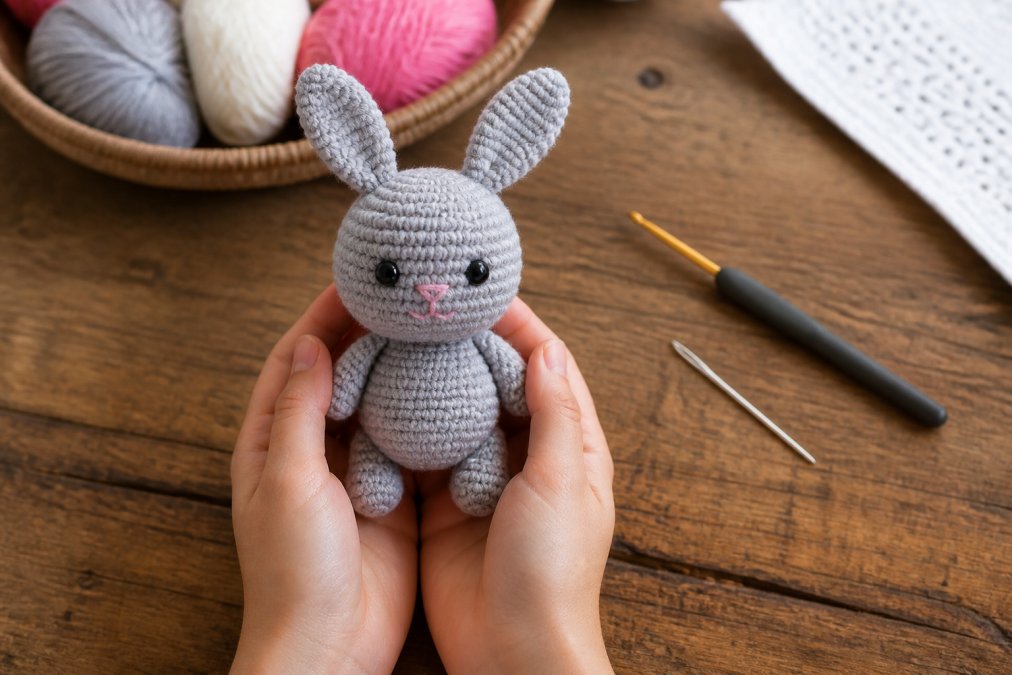
Independent amigurumi designers have built reputations through consistent releases and direct customer support. Crochet Creations Hub features patterns from independent designers like the creator of the Bunny Crochet Pattern PDF, a detailed amigurumi rabbit. This pattern includes a 20 cm finished size with clear abbreviations, materials lists, and step-by-step photographs at $1.99.
Other respected independent designers include Craftyiscool, Stitchfiddle, and Hooked by Robin. Buying directly from independent designers often provides faster customer support and potential pattern updates if errors are discovered. Always check copyright terms before selling finished items, most independent designers are reasonable but terms vary.
Avoiding AI-Generated Patterns
AI-generated patterns are flooding marketplaces and are often unusable. Red flags include vague stitch counts that don't add up mathematically, instructions that skip steps, inconsistent terminology, photos that don't match written instructions, and overly generic descriptions.
Check user reviews before buying. Real users leave specific feedback: "I had to frog back three times because the head was lopsided" or "The instructions for the eyes were unclear." Ravelry's project photos from real makers provide visual confirmation, if 90% of projects look professional and match designer photos, the pattern is likely legitimate.
How to Read Crochet Patterns and Evaluate Quality
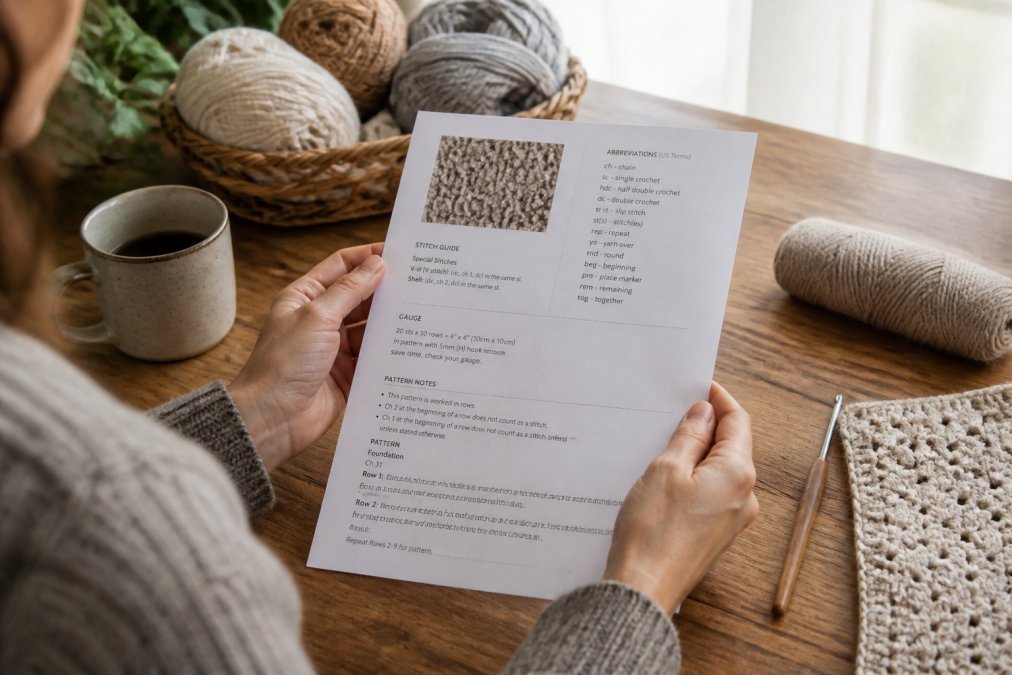
A well-written pattern follows logical structure: materials list, abbreviations, gauge information, then step-by-step instructions organized by component. A poorly written pattern jumps around and assumes knowledge you might not have.
Pattern Testing and Worked Photos
Worked photos showing each construction stage tell you whether the finished piece will actually look like the designer's example. When evaluating a pattern, ask: Do worked photos show all major construction steps? Can you see how stitches are placed? Are proportions realistic for the stated yarn weight and hook size?
Premium patterns like the Bunny Carrot Crochet Pattern PDF include extensive step-by-step photographs covering construction, facial embroidery, assembly, and final details. This visual documentation lets you troubleshoot by comparing your work to photos. Free patterns often skip worked photos entirely, creating steep learning curves for beginners.

Yarn Substitution and Gauge Swatch Guidance
A gauge swatch is a small test piece showing how many stitches and rows fit in a 4-inch square (peer-reviewed research). This tells you whether your tension matches the pattern designer's. If your gauge is off, your finished piece will be the wrong size.
Crochet a 4-inch swatch before starting the full project. If stitches and rows match the pattern's gauge, proceed. If significantly different, adjust your hook size until you match. This takes 15 minutes but saves hours of frustration.
Yarn substitution works when you match weight and fiber content. A sport weight acrylic pattern can usually accommodate other sport weight yarns (craftcouncil.org). Substituting chunky yarn for sport weight produces a significantly larger finished toy that may look disproportionate.
Beginner-Friendly Pattern Sources
Beginner crocheters need patterns assuming minimal prior knowledge: clear abbreviations, detailed stitch instructions, and simple designs. Crochet Creations Hub specializes in beginner-accessible patterns. The Plush Snuggler Bunny Crochet Pattern uses continuous spiral rounds and simple increases and decreases with step-by-step photographs and clear assembly guidance.

Other beginner-friendly sources include Craftsy (video tutorials paired with written patterns), Purl Soho (clear, beautifully formatted patterns with detailed photography), and Ravelry's free pattern section (community-vetted with user reviews highlighting difficulty level).
The key indicator of beginner-friendliness is whether the pattern includes abbreviations and stitch explanations. A beginner-friendly pattern says "single crochet (sc)" the first time it appears rather than assuming prior knowledge.
Where to Find Free Crochet Patterns
Free crochet patterns are abundant but quality varies. The best come from established designers building audiences before selling premium designs. Ravelry's free pattern database contains thousands of tested, community-vetted patterns with detailed reviews. YouTube channels like The Crochet Crowd and VeryPink Knits offer free video tutorials. Reddit communities like r/crochet regularly share free patterns and answer questions.
The trade-off with free patterns is less documentation. Worked photos might be minimal. Customer support is limited. For simple projects, this is fine. For complex amigurumi or garments, the lack of support becomes frustrating. Many independent designers offer one or two free patterns as samples, demonstrating quality before offering expanded paid collections.
Comparing Paid vs. Free Crochet Patterns
The decision comes down to what you're making and your skill level. Free patterns work for simple projects and experienced makers who troubleshoot independently. Paid patterns justify their cost through detailed instructions, worked photos, and designer support.
A paid pattern at $1.99 to $5.00 typically includes clear tested instructions, step-by-step worked photos, materials lists with specific yarn recommendations, gauge information, and designer contact. Free patterns often include vague instructions, minimal worked photos, limited materials guidance, and no designer support.
For beginners, paid patterns are worth the investment. Detailed instructions and photos prevent hours of frustration. For experienced makers tackling simple projects, free patterns often work fine.
Mobile-First Pattern Accessibility and User Reviews
Modern crocheters access patterns on phones and tablets. A pattern looking great on desktop might be impossible to read on a 5-inch screen. The best digital patterns are formatted for mobile viewing with large text, clear spacing, and logical organization.
User reviews are your window into real-world experience. Before buying, read reviews from makers who've completed the pattern. Look for specific feedback rather than generic praise. Ravelry's review system is particularly valuable because reviewers upload photos of finished projects alongside written reviews, providing visual feedback invaluable for assessing pattern quality.
| Pattern Source Type | Best For | Cost | Quality Consistency | Mobile Friendly |
|---|---|---|---|---|
| Digital marketplaces (Crochet Creations Hub, Etsy) | Specific designs, instant downloads | $1.99-$10+ | Varies; check reviews | Usually yes |
| Community platforms (Ravelry) | Pattern discovery, user feedback | Free to browse; patterns $0-$10+ | High; community-vetted | Yes |
| Video tutorials (YouTube) | Learning techniques, visual learners | Free | Variable; depends on creator | Yes |
| Independent designer websites | Direct support, pattern updates | $2-$15+ | High; designer-focused | Often limited |
| Craft blogs (Purl Soho, Craftsy) | Beginner patterns, free options | Free to $8+ | High; curated | Yes |
Switching from Brunaticality to explore brunaticality alternative for crochet patterns opens diverse options. The 2026 crochet pattern landscape is more accessible and community-driven than ever. Whether seeking beginner-friendly amigurumi, specialized designer work, or free patterns, you'll find reliable sources matching your skill level and budget.
Test platforms before committing. Try one free pattern from a new source. Check Ravelry reviews. Watch video tutorials. Then gradually integrate new sources while keeping favorites that work. At Crochet Creations Hub, we've built our collection around what modern crocheters need: instant downloads, clear instructions with worked photos, mobile-friendly PDFs, and designs for every skill level.
Start with one new source this week. Crochet one pattern. See how the instructions work. Then expand from there. You'll quickly discover which platforms match your style and stop feeling locked into any single option.
Get your Free Pattern from Crochet Creations Hub and start building a diverse collection of trusted pattern sources today.
Frequently Asked Questions
Q: Where can I find high-quality crochet patterns similar to Brunaticality?
A: Look for digital marketplaces like Etsy, Ravelry, and Craftsy, which host thousands of independent designers. Community forums like Reddit's r/crochet and Ravelry forums offer peer-reviewed patterns and recommendations. Crochet Creations Hub offers premium patterns starting at $1.99, with instant digital downloads and worked photos to verify quality before you commit.
Q: What should I look for in a high-quality crochet pattern?
A: Check for written instructions with clear stitch abbreviations, worked photos showing each construction step, accurate gauge information, and yarn weight specifications. Test reviews from other crocheters reveal whether a pattern has errors or unclear sections. Patterns from established independent designers typically include pattern testing notes and accessibility features like printable PDFs that scale properly.
Q: How do I know if a crochet pattern is AI-generated?
A: AI-generated patterns often have vague or repetitive instructions, inconsistent stitch counts, missing gauge guidance, and no worked photos. They may include generic warnings or lack specific yarn recommendations. Authentic patterns from human designers include tested materials lists, step-by-step photos, and designer notes about their creative process. Always check designer credentials and community reviews before purchasing.
Q: Are there free alternatives to paid crochet pattern sites?
A: Yes. Community sites like Ravelry, AllFreeeCrochet, and community forums host thousands of free patterns. YouTube offers video tutorials from independent designers. Many professional pattern designers release free beginner patterns as samples. However, paid patterns typically offer better quality control, more detailed instructions, worked photos, and pattern testing, making them worth the investment for intermediate and advanced projects.
Q: Can I substitute yarn in crochet patterns, and how do I know what works?
A: Yes, yarn substitution is possible if you match the weight and fiber type. Check the pattern's gauge (stitches per inch) and test with your substitute yarn using a gauge swatch before starting. Thicker yarns require larger hooks; thinner yarns need smaller hooks. Quality patterns include yarn weight guidance and notes on how substitutions affect finished size. Chunky yarn works best for quick projects, while sport weight or DK yarn suits detailed amigurumi.
This article was written using GrandRanker