

Best Budget Friendly Yarn for Practice Stitches
Table of Contents
- What Makes a Yarn Good for Practice?
- Best Budget Friendly Yarn: Our Top Picks
- Acrylic vs Cotton Yarn for Learning: Which Wins?
- How to Choose the Right Yarn Weight and Fiber
- Crochet Practice Project Ideas for New Stitches
- Common Mistakes to Avoid When Buying Practice Yarn
- Final Thoughts on Budget Friendly Practice Yarn
- Frequently Asked Questions
Last Updated: September 6, 2026
What Makes a Yarn Good for Practice?
Choosing the best budget friendly yarn for practice comes down to one factor above all else: stitch visibility. When you are learning a new stitch or technique, you need to see exactly where your hook enters each loop. A yarn that splits, fuzzes, or blends into itself hides your mistakes and makes the learning process frustrating.
The best budget friendly yarn for practice is a smooth, light-colored worsted weight acrylic. It holds its shape, shows clear stitch anatomy, and costs little enough that you never worry about wasting it while you learn. This guide breaks down what to look for, which fibers work best, and how to pick yarn that makes practice easier.
Most beginners make the same mistake: they buy the softest, prettiest yarn they can find, then struggle because it has no structure. A yarn with good stitch definition and a tight twist is easier to work with than an expensive luxury fiber. What matters is how the yarn behaves under your hook, not the price tag.
Best Budget Friendly Yarn: Our Top Picks
When you search for the best budget friendly yarn for practice, you will find dozens of options. The clear winner for most learners is a standard worsted weight acrylic in a solid, light color. Brands like Red Heart Super Saver and Caron Simply Soft offer reliable performance at a price that works for any budget.
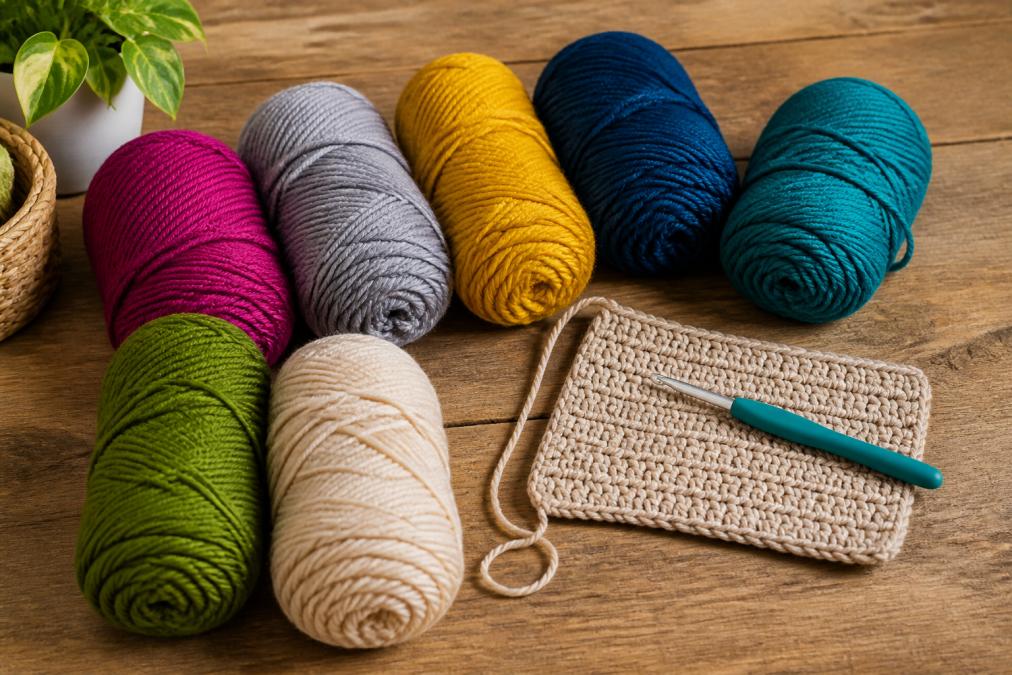
Here is a quick comparison of the yarn types you will encounter most often:
| Yarn Type | Weight | Best For | Watch Out For |
|---|---|---|---|
| Acrylic (Red Heart Super Saver) | Worsted | Stitch practice, durability | Can feel rough on sensitive skin |
| Acrylic (Caron Simply Soft) | Worsted | Softness + stitch clarity | Splits more easily than tighter twists |
| Cotton (Lily Sugar'n Cream) | Worsted | Tight stitches, dishcloths | Less stretch, can hurt hands |
| Wool blend | Worsted | Natural bounce | Higher cost per skein |
The absolute cheapest option per yard is usually a large acrylic skein. Compare that to smaller skeins of specialty fibers and the cost per project drops dramatically. Yarn weight standards from the Craft Yarn Council can help you understand how weight categories affect your hook size and gauge.
Acrylic vs Cotton Yarn for Learning: Which Wins?
Acrylic wins for most practice scenarios because it is forgiving. Cotton has almost no stretch, which means your tension mistakes show up immediately and your hands tire faster. Acrylic has a bit of give, making it easier to maintain an even tension while you build muscle memory.
The case for cotton is real, though. Cotton yarn produces crisp, well-defined stitches that make it easy to see your work. It is also more durable than acrylic for projects that will see heavy use, like dishcloths or market bags. Many crocheters who learn on cotton find the transition to other fibers smoother.
For the question of acrylic vs cotton yarn for learning, consider what you are practicing. If you are learning basic stitches and need to frog your work repeatedly, acrylic holds up better to unravelling. Cotton can fray and weaken when pulled apart multiple times. If you are practicing a final project you intend to keep, cotton's structure might serve you better.
A common approach is to keep both on hand: a budget acrylic skein for trying new stitches and a cotton skein for projects you plan to finish and use. This way you match the yarn to the task without overspending on either.
How to Choose the Right Yarn Weight and Fiber
Worsted weight yarn, labeled as a 4 on the Craft Yarn Council's standard yarn weight system, is the sweet spot for beginners. It is thick enough to see your stitches clearly, works up quickly, and pairs with a comfortable mid-size hook (typically US size I-9 or H-8). Lighter weights like fingering (weight 1) or sport (weight 2) require more patience and better eyesight; the finer strands make it harder to spot the V-shapes of your stitches, and your hook can easily split the yarn. Bulky (weight 5) and super bulky (weight 6) yarns work up fast but obscure stitch anatomy, the thick plies twist together, making it difficult to see where each loop begins and ends.
Fiber content matters more than most beginners realize, and it affects more than just price. Here is a tactile guide to how each fiber feels on your hook and needles, something most guides ignore but that directly impacts practice fatigue:
- Acrylic (e.g., Red Heart Super Saver): Smooth and slightly slippery, with a bit of give. It glides over the hook, which helps you maintain an even tension. The lack of friction means your hands won't tire as quickly, but it can feel rough on sensitive skin, try a softer acrylic like Caron Simply Soft if that is a concern.
- Cotton (e.g., Lily Sugar'n Cream): Crisp and inelastic. It has almost no stretch, so every tension mistake shows up immediately. The friction against the hook is higher, which can cause hand fatigue during long practice sessions. However, the firmness gives you clear stitch definition, making it easier to see your work.
- Wool (e.g., Patons Classic Wool): Springy and elastic, with a natural bounce that forgives tension inconsistencies. It feels warm and soft, but it is more expensive and requires hand washing unless labeled superwash. The elasticity makes it forgiving when you frog, but it can felt if you wash it wrong.
- Blends (e.g., Lion Brand Wool-Ease): These try to combine the best of both worlds, acrylic's durability with wool's softness. They often have a smoother feel than pure acrylic and better stitch definition, but they cost more per yard and may still require special care.
Washability is a practical concern you should not ignore. Acrylic yarn can go in the washing machine, which makes it ideal for gifts and everyday items. Wool requires hand washing unless it is labeled superwash. If you are practicing for a project that will need regular cleaning, choose a fiber that matches how the finished item will be used.
For crochet practice project ideas, a smooth worsted weight yarn in a light color like white, cream, or pastel yellow makes the best canvas. Dark colors hide your stitches and make it nearly impossible to see where your hook should go. Light colors reflect more light and show the V-shapes of your stitches clearly. This is not just a preference, it is a visual contrast issue. When the yarn is dark, the shadows between stitches blend into the yarn itself, reducing the contrast your eyes need to track your hook's path.
Crochet Practice Project Ideas for New Stitches
Once you have your budget friendly yarn, you need something to practice on. The best practice projects are small, flat, and useful when finished. A simple square or rectangle lets you repeat a stitch until it feels natural without committing to a large project.
Start with a basic single crochet square about 6 inches across. Work in rows, counting your stitches each time, until your edges stay straight. This builds the foundation for everything else. From there, move to half double crochet and double crochet, which add yarn overs and change the height of your stitches.
A dishcloth or washcloth is a classic first project. It uses basic stitches, works up quickly, and gives you something practical when you finish. A rectangular basket or coaster set serves the same purpose while teaching you to work in rounds. If you want to practice increasing and decreasing, a simple market bag pattern forces you to shape your work.
Crochet Creations Hub offers several beginner-friendly digital patterns that pair well with practice yarn. The Basic Crochet Basket Pattern uses Aran weight yarn and teaches you to build structure while creating a useful storage item. The Very Shelley Bookmark Crochet Pattern introduces shell stitches in a small, quick project that uses very little yarn.

Common Mistakes to Avoid When Buying Practice Yarn
The most common mistake is buying yarn based on color or softness rather than function. That gorgeous dark navy skein will frustrate you within minutes because you cannot see your stitches. The fluffy chenille yarn feels wonderful but obscures every loop. Save these for later projects and stick to smooth, light-colored yarn for practice.
Another frequent error is ignoring the yarn label entirely. The label tells you the weight, recommended hook size, fiber content, and care instructions. Matching your hook size to the yarn weight prevents frustration from stitches that are too tight or too loose. The Craft Yarn Council's standard yarn weight system provides a helpful chart for matching yarn weights to hook sizes. But beyond that, the label also lists the dye lot number, a critical detail if you need to buy more yarn later. Different dye lots can produce slightly different shades, which will show up as a visible line in your finished project.
Buying too little yarn is a practical mistake that stalls many projects. A practice swatch might only need a few yards, but a full project like a scarf or blanket needs consistent yardage from the same dye lot. When you find a yarn you like, buy enough for the entire project at once. This also saves money, since larger skeins typically cost less per yard than smaller ones. The cost per yard difference is substantial.
A less obvious mistake is ignoring the yarn's twist and ply. A tightly twisted, multi-ply yarn (like most worsted weight acrylics) holds its shape better and resists splitting. A loosely twisted, single-ply yarn (like some bulky or novelty yarns) will split easily under your hook, causing you to miss loops and create uneven stitches. When you pick up a skein, twist the strand between your fingers, if it separates easily, it will likely split on you.
Finally, do not overlook the 'feel' of the yarn on your hands. If the yarn is too rough, you will develop friction blisters on your fingers, especially if you hold the yarn tightly. If it is too slippery, it may slip out of your tension hand. Most budget acrylics strike a balance, but if you have sensitive skin, look for a 'soft' or 'gentle' labeled acrylic. A quick test: rub the yarn against the inside of your wrist for 10 seconds. If it irritates, it will irritate you during a long practice session.
Final Thoughts on Budget Friendly Practice Yarn
The best budget friendly yarn for practice is one you are not afraid to use. When you worry about wasting expensive yarn, you hesitate. When you hesitate, your tension suffers and your stitches become uneven. A cheap acrylic skein removes that pressure and lets you focus on your technique.
Start with a light-colored worsted weight acrylic, a comfortable hook, and a simple pattern. Practice your stitches until they feel natural, then experiment with different fibers and weights as your skills grow. The skills you build now will carry into every project you make later.
When you are ready to turn your practice into finished projects, Crochet Creations Hub offers instant digital downloads of beginner-friendly patterns that work beautifully with budget yarn. From the Amigurumi Cactus Pattern to the Bucket Hat Pattern, there is a project for every skill level. Ravelry's yarn database for comparing prices and reviews can help you research yarn options before you buy. Get your free pattern and start practicing today.


Frequently Asked Questions
Is acrylic yarn the best choice for learning how to crochet?
Yes, for most beginners. Acrylic yarn is budget-friendly, widely available, and comes in a huge range of colors. It is also durable, which means you can pull out your stitches and start over without the yarn fraying or breaking. Look for a smooth, light-colored worsted weight acrylic so you can easily see your stitch anatomy and correct mistakes as you learn.
What is the best weight of yarn for a beginner to practice with?
Worsted weight yarn, labeled as a 4 on the yarn weight category system, is the standard recommendation. It is thick enough to work up quickly and show clear stitch definition, but not so bulky that it is hard to handle. A medium shade in a smooth texture gives you the best visibility for learning new stitches.
Where can I find the best deals on budget friendly yarn?
Check the clearance section of your local craft store first, and always look for coupons before you buy. Big-box retailers frequently run sales on popular acrylic brands, and buying in bulk can lower the cost per project. For a different option, try a cotton blend when you are ready to practice projects that need more structure, like our Fruit Snack Coozie Pack pattern.
What are some crochet practice project ideas for beginners?
Start with flat squares to practice basic stitches and even tension. Once you are comfortable, move to small projects that build skills without a big time commitment, like a Basic Crochet Basket or a Crochet Cute Turtle Pattern. These use worsted weight yarn and simple construction, so you can focus on your technique while making something you will actually use.