

Simple Crochet Projects for Home Decor: 2026 Guide
Table of Contents
- Quick Crochet Projects for the Home You Can Finish in a Weekend
- The Best Yarn for Crochet Home Decor: What to Look For
- Easy Crochet Coasters and Placemats for Everyday Use
- Beginner-Friendly Crochet Projects for Every Room
- How to Care for and Maintain Your Crochet Decor
- Styling Crochet in Modern Interior Design
- Conclusion: Start Your Next Project Today
- Frequently Asked Questions
Last Updated: September 12, 2026
Quick Crochet Projects for the Home You Can Finish in a Weekend
Simple crochet projects for home decor are small, low-commitment makes that add handmade warmth to a room in a single weekend, a finished object you can display, not another half-finished blanket.
The appeal is speed and low yarn cost. A coaster set, a hanging planter, or a pillow cover uses one or two skeins and a few evenings. According to the Craft Yarn Council's guide to yarn weights and care, matching yarn weight to the project is the single biggest factor in whether a small make holds its shape.

Projects that get finished have a clear end point, a 12-inch pillow does; a queen-size blanket doesn't.
The Best Yarn for Crochet Home Decor: What to Look For
The best yarn for crochet home decor is a durable, washable fiber that holds stitch definition, for most items, cotton or a cotton blend. Decor takes more abuse than a scarf: it gets set on tables, sat on, washed, and left in sunlight.
Three things decide whether a yarn works for a home project:
- Fiber: Cotton resists stretching and cleans well. Acrylic is cheaper and holds color.
- Weight: Worsted weight is the workhorse for coasters, baskets, and pillows.
- Ply and twist: Tighter twist means less pilling on items that get handled daily.
For a deeper look at how yarn weight affects finished size, the Craft Yarn Council's standard yarn weight system is the reference most designers work from.
Cotton vs. Acrylic: Which Holds Up Better?
Cotton wins for anything touching heat, water, or food: it handles a hot mug, scrubs clean, doesn't melt, and barely stretches, ideal for coasters and potholders.
Acrylic wins on price, color range, and softness, suiting decorative pieces that won't take heavy wear, like wall hangings. It can pill with friction and lose shape after repeated washing.
A cotton-acrylic blend splits the difference, but for most beginner-friendly home projects, worsted-weight cotton is the safest single choice.
Budget-Friendly Yarn Alternatives for Large Decor
A single basket or floor pouf can eat three to five skeins. At roughly $4 to $8 per skein for worsted cotton, a large basket can cost $25 to $40 in yarn alone.
Four ways to cut that cost without wrecking the finished piece:
- Thrift-store sweaters. A large cotton or cotton-blend sweater often costs less than two skeins and yields several hundred yards when unraveled. Look for cuttable seams and unfelted yarn.
- Leftover skeins. Coasters, plant hangers, and small wall hangings use under 100 yards each, ideal for partial skeins from bigger projects.
- Jumbo and super-bulky acrylic. For baskets and poufs, super-bulky acrylic works up fast and covers area with fewer skeins, despite the higher per-skein price.
- Mill-end and cone yarn. Cones sold for machine knitting cost less per yard than balled yarn, with generous yardage for repetitive projects like placemats.
One caution on thrifted yarn: if the sweater was machine-dried into felt, the fibers have fused and it won't unravel cleanly. Test a small cut before buying.
Eco-Conscious Fiber Choices
Most pattern roundups ignore where the yarn comes from, but home decor is a high-traffic, long-lived category, so fiber choice has a longer footprint than a seasonal accessory. the Textile Exchange's materials market reporting tracks how different fibers compare on environmental impact, which is worth weighing if you're making decor in volume.
A few practical guidelines:
- Organic cotton avoids conventional cotton's pesticide load and comes in worsted and DK weights suited to coasters, dishcloths, and baskets.
- Recycled cotton and blends are common in craft-store lines and perform close to virgin cotton for non-structural items.
- Linen and linen blends are durable and soften with washing, suiting placemats and table runners, though they're stiffer to work with.
- Avoid novelty fibers for functional pieces. They shed, pill, and rarely survive a wash.
None of this requires a specialty supplier. The same weight and ply rules apply; just read the fiber content and origin on the label before you buy.
Easy Crochet Coasters and Placemats for Everyday Use
Easy crochet coasters and placemats are the fastest way into home decor crochet: flat, small, and forgiving of uneven tension. One coaster takes under an hour once you know the stitch.
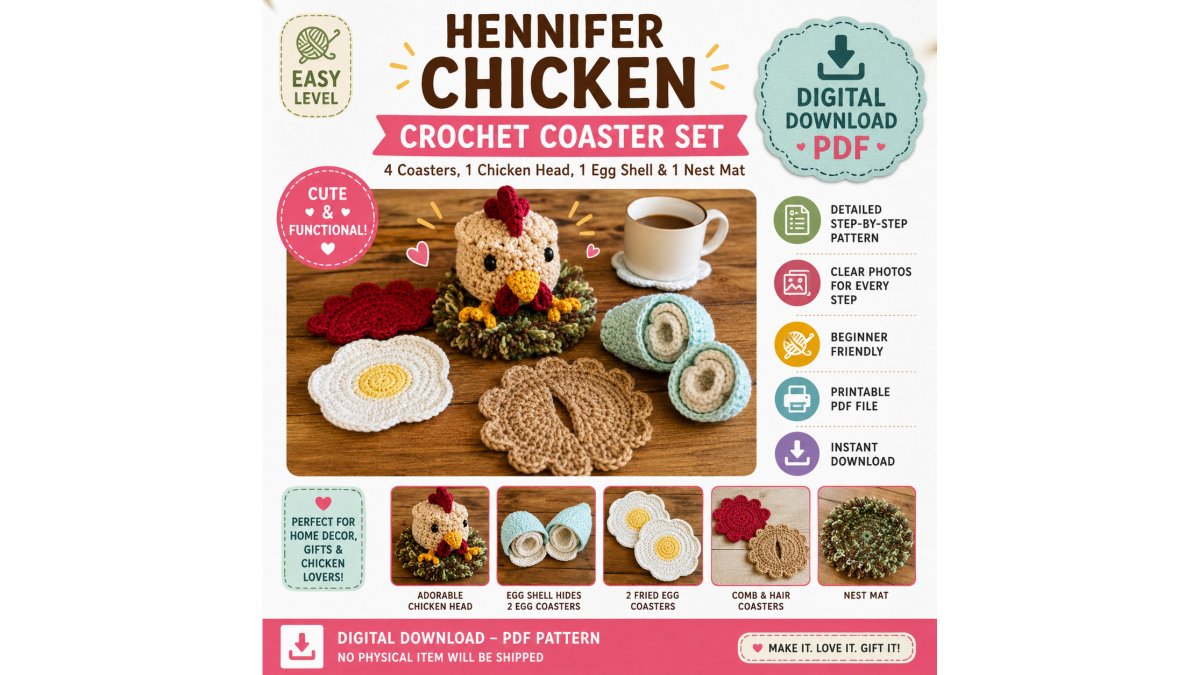
The Hennifer Chicken Crochet Coaster Set from Crochet Creations Hub is functional decor done well: four coasters plus a chicken-shaped display and textured nest mat that tuck inside each other for storage. The chicken is about 7 inches long by 7.5 inches tall, with egg coasters roughly 5.5 inches across, worked in medium-weight yarn on 5 mm to 6.5 mm hooks.
For a plain set, work in joined rounds with single crochet and a border of half double crochet. Keep tension firm so the edges stay flat. Block each coaster under a damp towel and let it dry flat before stacking.
Beginner-Friendly Crochet Projects for Every Room
Beginner-friendly crochet projects share three traits: one or two stitch types, no shaping math, and a finished size under 12 inches. If a pattern needs you to count rows across a 200-stitch foundation chain, it isn't beginner-friendly.
A common mistake is starting with amigurumi because it looks simple, continuous rounds with tight tension are a real skill. Flat, repetitive projects build it faster.
The Amigurumi Cactus Crochet Pattern from Crochet Creations Hub is rated Easy and includes three sizes, the small starting from a chain of 11, in worsted weight yarn on a D/3 (3.25 mm) hook. It's a reasonable first stuffed project because the ribbed construction hides small tension differences.

Kitchen Crochet Essentials
Kitchen crochet essentials are the items that earn their counter space: potholders, dishcloths, towel toppers, and storage. Cotton is non-negotiable here. Acrylic near a hot pan is a genuine hazard, and no pattern is worth that risk.
The Boho Bag Saver Crochet Pattern turns plastic grocery bags into a hanging organizer with lace texture and a tassel. It finishes about 4.5 inches wide and 24 inches long, in DK or worsted yarn on a 5 mm hook, rated advanced beginner to intermediate.
Decorative Wall Hangings and Plant Hangers
Decorative wall hangings and plant hangers deliver the most visual impact per hour of work. A plant hanger is essentially a chain, a few rounds, and some cord, one of the quickest wins in home decor crochet.
The Fern Plant Car Hanging Crochet Pattern creates a miniature hanging fern with a beige planter, cascading leaves, and fiddlehead details, in super fine yarn on 2.0 mm and 3.0 mm hooks, with five leaves and two hanging chains of roughly 60 to 70 chains each. The Succulent Potted Plant Car Hanging Crochet Pattern follows the same idea with seven to nine trailing strands.
Both work as small botanical accents on a shelf or hook, not just in a car. For a larger statement piece, the Rustic Crochet Chandelier Lamp Pattern builds an openwork pendant shade in rope stitch, but it involves electrical components, so have the wiring assembled or checked by a qualified professional.
| Project | Skill Level | Typical Finish Time | Best Room |
|---|---|---|---|
| Coaster set | Beginner | 1-2 hours | Kitchen, coffee station |
| Plant hanger | Beginner | 2-3 hours | Entryway, bathroom |
| Cactus pillow | Easy | 4-6 hours | Sofa, nursery |
| Bag saver | Advanced beginner | 3-5 hours | Kitchen, pantry |
| Bonsai tree | Intermediate | 8-12 hours | Office, shelf |
How to Care for and Maintain Your Crochet Decor
Care and maintenance is why handmade decor looks tired within a year. The fiber decides the method, so check the yarn label first.
- Cotton items: Machine wash cold on gentle, reshape while damp, dry flat.
- Acrylic items: Machine wash cold, tumble dry low, or lay flat to avoid stretching.
- Stuffed pieces: Spot clean where possible. Full washing can shift stuffing and distort shaping.
- Hanging pieces: Dust with a soft brush. Wash only when visibly soiled, since repeated washing weakens hanging cords.
Two habits extend the life of anything you make: rotate seasonal pieces into storage rather than leaving them in direct sun, and mend loose ends immediately, since one pulled strand in a hanging cord can unravel a whole join.
Blocking: The Step That Sets the Shape
Blocking makes a finished piece look intentional instead of homemade, and it's the most-skipped step in home decor crochet. Fiber picks the method.
- Wet blocking (cotton, linen, wool): Soak in cool water 15 to 20 minutes, press out excess water in a towel, pin to a blocking mat at the finished dimensions, and air-dry completely. This opens lace, straightens edges, and evens stitch tension.
- Steam blocking (acrylic): Acrylic doesn't respond to water like natural fibers. Hold a steam iron an inch or two above the piece, let the steam penetrate, then pat flat and cool. Never press the iron directly onto acrylic, the fibers can melt and flatten permanently.
For flat items like coasters and placemats, pinning to the exact finished dimensions matters more than the method. A coaster blocked to 4 inches stays 4 inches; one dried in a heap won't.
Stiffening for Wall Hangings and Baskets
Flat wall hangings, snowflake ornaments, and openwork baskets hold shape better with a stiffener. Three options, lightest to firmest:
- Fabric starch spray: The gentlest option, adding light body that washes out, best for pieces you'll re-block seasonally.
- Glue-and-water mix: Roughly one part white craft glue to one part water. Dip, squeeze out excess, pin to shape, and dry. It holds firmly but leaves a stiff hand and isn't reversible.
- Sugar-and-water stiffening: An old-fashioned method that dries clear and firm, but isn't moisture-resistant, a poor choice for bathrooms or kitchens.
Whichever you use, pin over wax paper or a plastic sheet and give it a full 24 hours to dry before hanging, a piece that feels dry at 12 hours can still sag.
Reshaping and Repairing Over Time
Even well-made decor drifts. A few fixes that bring pieces back:
- Stretched baskets: Mist lightly, stuff with a towel to the intended shape, and dry; the cotton re-sets around the stuffing.
- Faded or pilled surfaces: A fabric shaver or fine-tooth comb removes pills from acrylic without cutting stitches.
- Sagging hanging cords: Re-chain or re-knot rather than stretching back, stretched yarn rarely returns to length.
- Loose stuffing in pillows: Open a small seam, add fiberfill, and re-close with a ladder stitch.
Styling Crochet in Modern Interior Design
Styling crochet in modern interiors comes down to restraint. Handmade texture reads as intentional in a minimal room and as clutter in a busy one.
Three approaches that work:
- Group in odd numbers. Three amigurumi cacti in graduated sizes on one shelf reads as a collection. One lonely cactus reads as an afterthought.
- Match texture, not color. Pair a crochet piece with linen, wood, or ceramic in the same neutral family. The stitch provides the interest.
- Anchor with function. A coaster set or a bag saver earns its place because it does a job. Decorative-only pieces work best in low-traffic spots like a shelf or a wall.
For eco-conscious makers, the Textile Exchange's materials market reporting tracks how fiber choice affects the environmental footprint of a finished piece, which is worth weighing if you're making decor in volume. Budget-friendly alternatives exist too: cotton thrift-store sweaters can be unraveled for yarn, and leftover skeins from larger projects are perfect for coasters and small plant hangers.

The Cactus Pillow Pattern is a good test case: roughly 12 inches tall with bobble texture and a crochet flower, it holds a sofa corner on its own. In a southwestern or neutral room it's the accent; in a room with five patterns already, it's noise.
Conclusion: Start Your Next Project Today
The gap between wanting handmade decor and having it is almost always the same: too many unfinished projects and no clear starting point. Pick one small piece, one yarn, and one weekend, a coaster set or plant hanger proves the process works.
Crochet Creations Hub makes that first step easy with premium digital crochet patterns delivered as instant downloads, pattern bundles, and free patterns and resources. Every pattern is ready to print and use the same day, and the printable crochet planner tracks what's in progress so projects actually get finished.
Get your free pattern from Crochet Creations Hub and turn a single skein into something you'll actually display.
Frequently Asked Questions
What are the easiest crochet projects for beginners to make for home decor?
Coasters are the easiest starting point because they are small, flat, and use only basic stitches like single crochet. Placemats follow the same idea with a larger rectangle. A simple hanging grocery bag holder is another beginner-friendly option that uses repetitive stitches and works up quickly. These projects teach you tension and stitch consistency without the pressure of shaping or assembly. Once you finish a few, you can move on to slightly more involved pieces like plant hangers or textured pillows. Starting small builds the confidence you need for larger crochet home decor projects later.
How do I choose the right yarn for crochet home decor projects?
Cotton yarn is the go-to choice for items that get daily use, like coasters, placemats, and kitchen accessories, because it is absorbent, durable, and holds its shape after washing. For decorative pieces that will not be washed often, such as wall hangings or plant hangers, acrylic or cotton blends work well and come in a wider range of colors. Worsted weight (Weight 4) is the most versatile for home decor because it works up quickly and pairs well with a 5.0 mm to 6.0 mm hook. If you want a softer drape for blankets, a DK weight yarn gives you a lighter finished fabric.
Can I crochet home decor projects in under an hour?
Yes. Small projects like coasters, LED tealight holders, and mini plant hangers can be finished in 30 to 60 minutes once you know the stitches. A coaster typically takes about 20 minutes. A small amigurumi cactus in a pot might take 45 minutes to an hour depending on the size. The key is choosing patterns with minimal assembly and repetitive stitch counts. Patterns rated Easy or Beginner that use worsted weight yarn and a 5.0 mm hook tend to be the fastest to complete.
How do I wash and care for crochet home decor items?
Most cotton crochet items like coasters, placemats, and baskets can be hand washed in cool water with a mild detergent, then laid flat to dry. Avoid wringing or twisting the piece, which can stretch the stitches. For acrylic pieces, machine washing on a gentle cycle in a mesh bag works, but air drying is still best to prevent heat damage. Decorative items that do not get dirty often, like wall hangings or plant hangers, usually just need a light dusting or a quick shake outdoors. Always check the yarn label for specific care instructions before washing.