

How to Crochet a Baby Sweater for Beginners
Table of Contents
- Materials and Tools You'll Need
- Best Yarn for Baby Sweaters
- How to Read Crochet Patterns for Sweaters
- Crochet Baby Sweater Size Chart and Customizing Fit
- How to Crochet a Baby Sweater: Step-by-Step Assembly Guide
- Common Mistakes to Avoid When Crocheting Baby Sweaters
- Care and Maintenance Instructions for Handmade Baby Sweaters
- Frequently Asked Questions
Last Updated: September 3, 2026
Materials and Tools You'll Need
Crocheting a baby sweater requires a short list of essentials. You'll need a crochet hook (typically H/8 (5mm) to J/10 (6mm) for baby sweaters), yarn, a tapestry needle for seaming, scissors, and stitch markers to track your place. A printed or digital copy of your pattern keeps you on track without constant scrolling.
Best Yarn for Baby Sweaters
The yarn you choose determines how comfortable, durable, and safe your finished sweater will be. This is not the place to compromise on quality.
Yarn Weight and Hook Size Recommendations
For baby sweaters, worsted weight (medium weight or #4) is ideal for beginners. This weight strikes a balance between working quickly and creating fabric dense enough to hold its shape. Worsted weight pairs with H/8 (5mm) to J/10 (6mm) hooks, producing fabric with good drape and structure. Lighter weights like DK work more slowly but create softer sweaters. Avoid bulky weights, which create uncomfortable, heavy garments.
The relationship between yarn weight and hook size determines gauge. A hook that's too large creates loose, floppy fabric. A hook that's too small creates dense, stiff fabric. Most yarn labels recommend hook sizes; follow them as a starting point, then adjust based on your gauge swatch.
Yarn Fiber Safety for Infants
Not all yarn is safe for baby skin. Acrylic is affordable but can irritate sensitive skin and doesn't breathe well. Cotton and cotton blends are significantly better choices because they're hypoallergenic, breathable, and machine washable (the American Academy of Dermatology). Merino wool and superwash wool are soft enough for babies and naturally temperature-regulating (peer-reviewed research). Bamboo yarn is silky, hypoallergenic, and sustainable, though pricier.
Avoid novelty yarns with loose fibers, beads, or embellishments, babies explore the world by putting things in their mouths. Test your chosen yarn by rubbing it vigorously on your inner wrist; if it irritates your skin, it will irritate a baby's.
How to Read Crochet Patterns for Sweaters
A crochet pattern is a set of instructions written in abbreviations and symbols. Reading one successfully requires understanding the shorthand.
Understanding Crochet Abbreviations
Every crochet pattern uses the same core abbreviations. Single crochet (sc) creates tight, dense fabric. Half double crochet (hdc) works up faster. Double crochet (dc) creates more open fabric. Slip stitch (sl st) joins rounds or moves yarn without adding height. Yarn over (yo) is the fundamental motion of crochet. Chain (ch) creates the foundation row. Increase (inc) adds stitches to widen fabric, while decrease (dec) removes stitches to shape the garment.
Patterns also use abbreviations like st (stitch), rnd (round), row, sp (space), and tog (together). Most patterns include an abbreviation key at the beginning; always reference it before starting.
Interpreting Stitch Counts and Gauge Swatches
A stitch count tells you how many stitches to create in your foundation chain. This number is critical; miscounting cascades into problems throughout the entire sweater.
Gauge is the number of stitches and rows per 4 inches of finished fabric. If your pattern calls for a gauge of 18 stitches and 12 rows over 4 inches, and your gauge swatch measures 20 stitches and 14 rows, your finished sweater will be too small.
To check gauge, crochet a swatch at least 6 inches square using your chosen yarn and hook. Block it (wet it and lay it flat to dry), then measure. Count stitches and rows in the center 4-inch square, avoiding the edges where tension is often different. If your gauge is off, switch to a larger or smaller hook and try again.
Crochet Baby Sweater Size Chart and Customizing Fit
Baby sizing is not standardized across patterns, which is why understanding measurements matters more than trusting a size label alone.

Sizing for Different Body Types
Most baby sweater patterns offer sizes for newborn, 3 months, 6 months, and 12 months. A newborn typically has a 16-18 inch chest, while a 6-month-old ranges from 18-20 inches (the CDC). Add 2-4 inches of positive ease (extra room) so the sweater fits comfortably over a diaper and allows movement.
Measure from the center back neck, across the shoulder, down the arm to the wrist for sleeve length. A newborn's sleeve might be 6 inches, while a 12-month-old's could be 10 inches.
If a pattern doesn't offer your exact size, you can adjust it by working fewer or more rows before shaping the armhole. Adding or subtracting rows in the body section changes length without affecting width. This flexibility is one reason baby sweaters are ideal beginner projects.
How to Crochet a Baby Sweater: Step-by-Step Assembly Guide
This is where theory becomes reality. We'll walk through the actual process of creating a baby sweater, from the first chain to the final seam.
Step 1: Create Your Foundation Chain
The foundation chain is your starting point. Count your stitches carefully; this is the most common place beginners make mistakes. If your pattern calls for 60 stitches, you need exactly 60 chain stitches plus one extra for turning.
Make a slip knot and place it on your hook. Yarn over and pull through the loop. Repeat until you've created the required number of chains. Count them as you go, not at the end; it's easier to fix a miscounted chain immediately than to unravel rows of work.
The tension of your chain affects how easily you can work into it. If your chain is too tight, you'll struggle to insert your hook in the next row. If it's too loose, your sweater edge will be sloppy.
Many patterns use a turning chain at the beginning of each row. For single crochet, you need one turning chain. For half double crochet, you need two. For double crochet, you need three. Using the wrong number throws off your stitch count.
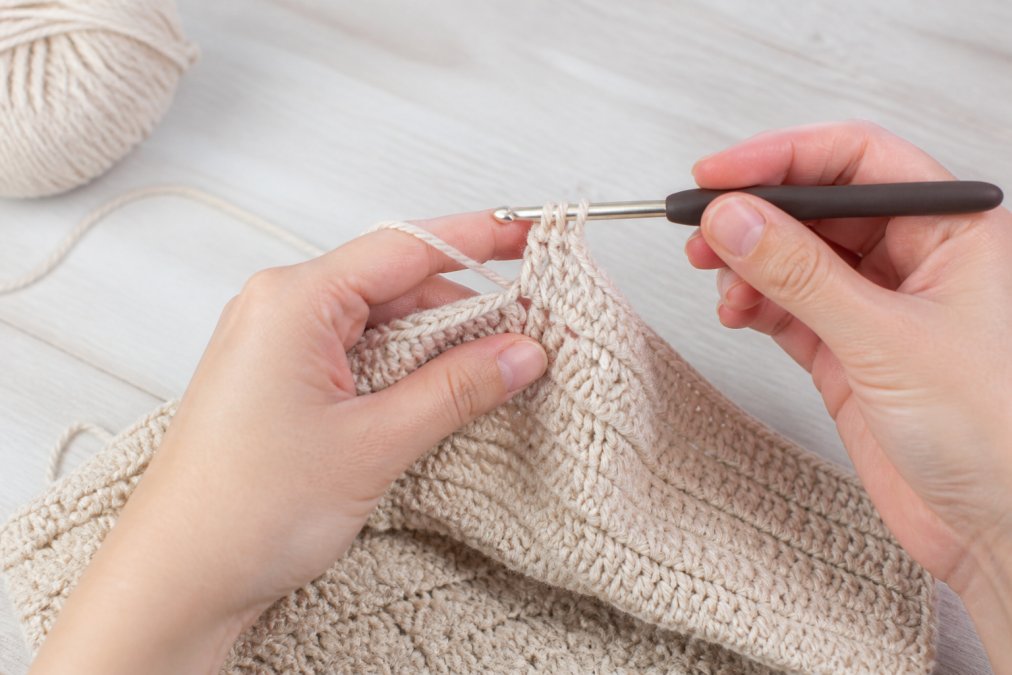
Step 2: Work the Body in Rows or Rounds
Most baby sweaters are constructed in rows, which is simpler for beginners. You'll work back and forth, creating a flat rectangle that eventually becomes the front and back panels.
As you work each row, maintain consistent tension. Tension is the tightness of your stitches; loose tension creates floppy fabric, while tight tension creates stiff fabric. Count your stitches at the end of each row. If you're consistently losing or gaining stitches, you're likely accidentally creating extra stitches or skipping stitches.
Work until your rectangle reaches the desired length, typically measured from the bottom edge to just below where the armholes will begin.
Step 3: Construct Sleeves and Armholes
Armholes are created by decreasing stitches at the beginning and end of rows. A typical decrease involves slip stitching across several stitches at the beginning of a row, then working to the end.
Sleeves are either worked separately and sewn on, or worked in the round from the armhole opening. For beginners, separate sleeves are easier. Work two identical rectangular pieces, slightly tapered toward the wrist by decreasing stitches every few rows.
Step 4: Seaming and Adding Finishing Details
Seaming joins your separate pieces into a finished sweater. The mattress stitch is the most common seaming method for crochet, creating an invisible seam that looks professional.
Thread your tapestry needle with a length of yarn. Insert the needle under the first stitch on one piece, then under the corresponding stitch on the other piece. Move up one stitch and repeat, creating a ladder-like pattern. Pull gently every few stitches to close the seam.
Finishing details include weaving in ends, adding buttons if the pattern calls for them, and blocking. Blocking involves wetting the finished sweater, shaping it to the correct dimensions, and letting it dry flat.
Common Mistakes to Avoid When Crocheting Baby Sweaters
The most common mistake is inconsistent tension. Your early rows might be tight while later rows are loose, creating a lumpy sweater. Check your tension frequently and adjust your grip or hook size if needed.
Miscounting stitches causes problems that compound through the entire project. Count stitches regularly, not just at the beginning. Skipping the stitch marker step leads to losing track of where you are in a round or complex pattern. Use markers religiously.
Working too tightly is another common issue, especially for beginners who concentrate hard on getting stitches right. This creates stiff, uncomfortable fabric. Relax your hands and remember that crochet should feel enjoyable.
Not checking gauge wastes time and yarn. A 2-stitch-per-inch difference in gauge changes your sweater from perfectly fitting to unwearable. Choosing yarn that's not suitable for baby skin wastes effort on a garment the baby can't wear comfortably.
Care and Maintenance Instructions for Handmade Baby Sweaters
A handmade baby sweater is an investment of time and love. Proper care extends its life and keeps it looking beautiful.
Most baby sweaters should be hand washed in cool water with a gentle detergent designed for delicate fabrics. Machine washing can felt wool or damage cotton blends. After washing, gently squeeze out excess water, never wring or twist. Roll the sweater in a clean towel to absorb moisture, then lay it flat on a dry towel to air dry.
Store the sweater in a clean, dry place away from direct sunlight, which can fade colors. Fold it rather than hanging, as hanging can stretch the shoulders out of shape. Check the sweater periodically for pilling and remove with a fabric comb or lint roller. If damaged, repair promptly with a whip stitch or by crocheting a patch on the inside.
Creating a baby sweater for beginners is an achievable goal that combines creative satisfaction with a meaningful gift. The techniques you learn, tension control, stitch counting, shaping, and seaming, form the foundation for every future crochet project. Start with quality yarn, follow your pattern carefully, and don't rush. At Crochet Creations Hub, we've designed beginner-friendly patterns that walk you through each step with detailed instructions and photo guides. Our baby sweater patterns include multiple sizes, customization options, and clear abbreviations so you can focus on the joy of making rather than decoding complex instructions. Download a pattern today and join thousands of makers creating handmade treasures for the babies they love.

| Sweater Component | Typical Stitch | Rows/Rounds | Purpose |
|---|---|---|---|
| Foundation chain | Chain stitch | 1 | Starting point for body |
| Body section | Single or half double crochet | 30-50 | Main rectangular panel |
| Armhole shaping | Decrease at row edges | 4-8 | Creates arm opening |
| Sleeves | Single or half double crochet | 20-40 | Arm coverage |
| Seaming | Mattress stitch | N/A | Joins pieces together |
Frequently Asked Questions
What yarn is best for a beginner baby sweater?
Worsted weight yarn in acrylic or cotton blends works best for beginners. These yarns are forgiving, easy to see your stitches in, and soft for babies. Avoid fuzzy or delicate yarns until you're comfortable with your tension and stitch consistency. Look for yarn labeled as baby-safe, hypoallergenic, or machine-washable to ensure durability and safety for infant wear.
How do I read a crochet pattern for a sweater?
Start by identifying the abbreviations (sc for single crochet, hdc for half double crochet, etc.). Read the pattern from left to right and bottom to top. Pay attention to stitch counts, increases, and decreases that shape the garment. Use a stitch marker to track your place and count stitches regularly. Most patterns include a key explaining all abbreviations at the top, reference it constantly as you work.
How do I know what size baby sweater to crochet?
Use a crochet baby sweater size chart that matches your pattern. Measurements typically include chest width, length, and sleeve length for newborn through 12-month sizes. Measure an existing baby garment that fits well to find your target size. Most patterns provide finished measurements, not yarn amounts, so you can adjust the size before starting. When in doubt, slightly larger is better than too small, as babies grow quickly.
What are the easiest stitches to use in a beginner baby sweater?
Single crochet and half double crochet are the easiest and most forgiving stitches for beginners. These create dense, sturdy fabric perfect for baby sweaters. Skip complex stitches like herringbone or intricate decreases until you're confident. Simple stockinette-style patterns using just one or two stitch types help you focus on shaping and fit rather than struggling with technique.
This article was written using GrandRanker